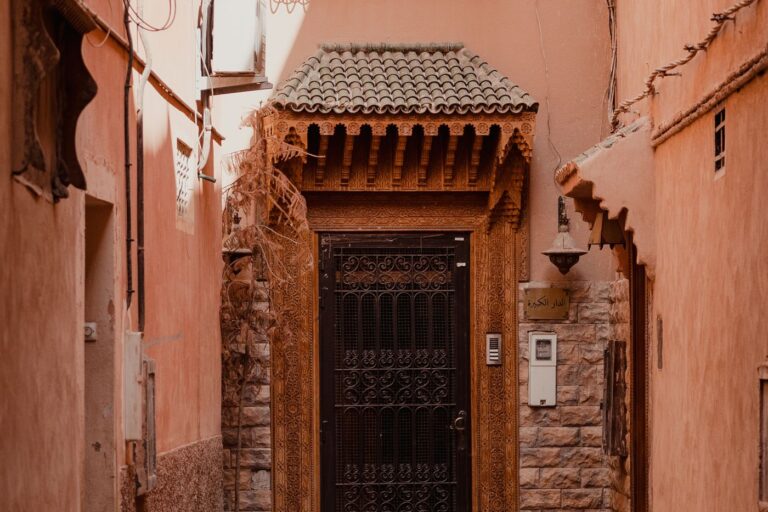

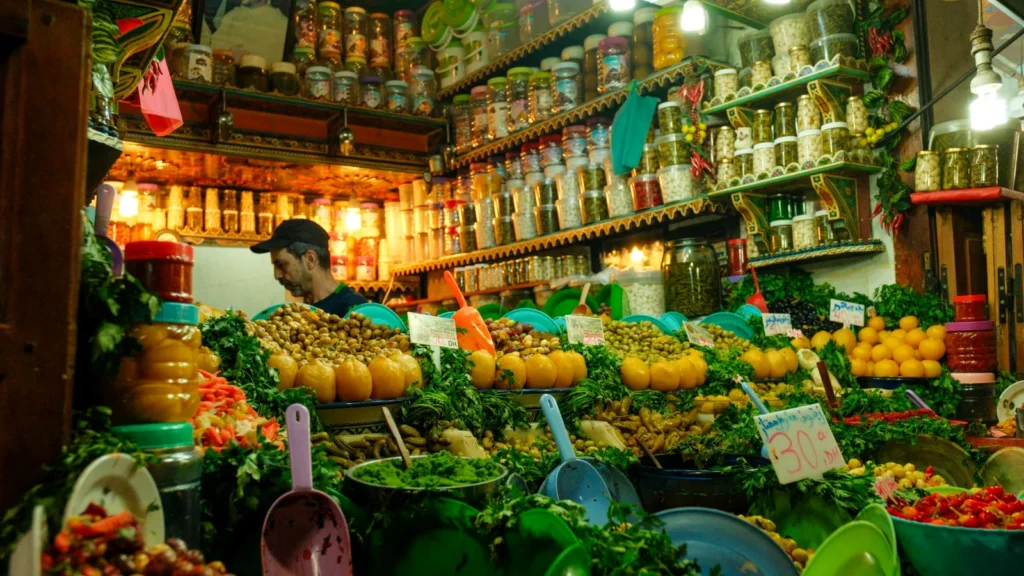
A souk in Fes Morocco is not one market but a maze of specialist lanes inside Fes el Bali, each tied to a craft: copper, spices, wood, leather, nuts and dried fruit. Knowing which lane sells what turns a confusing walk into a shopping route, and it makes bargaining easier because you know what you are comparing.
This guide maps the main souks, what each sells, how bargaining works, how to visit the Chouara tannery and what to bring. It draws on Barceló, Europe Up Close (a personal account published in 2010 and updated in 2017, so its prices are dated) and Third Eye Traveller. Where the sources are vague or conflict I say so.
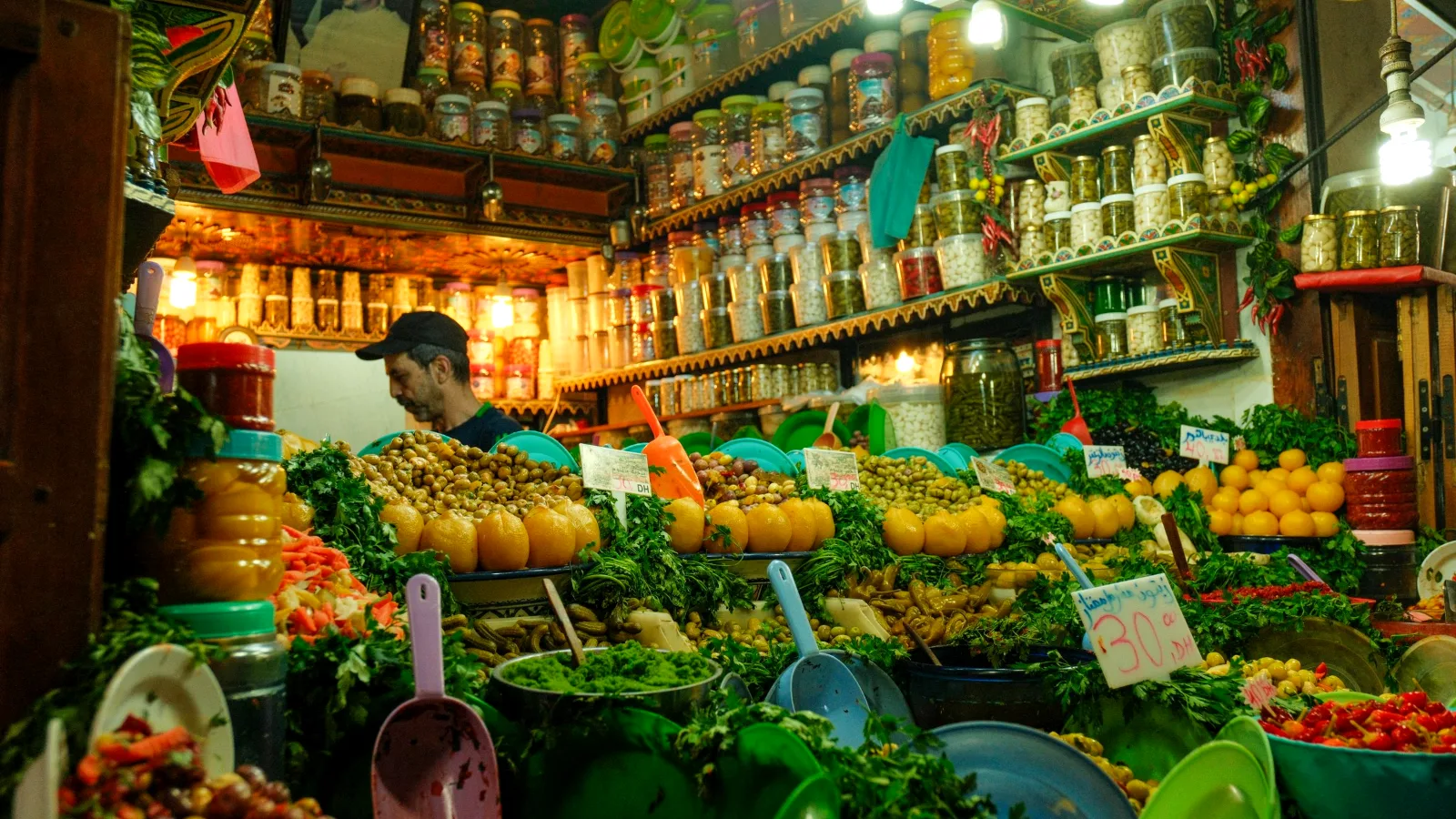
Table of Contents
Souk Fes Morocco: which lane sells what
| Souk | What it sells | Where |
|---|---|---|
| Henna souk | Henna for hair and hands, natural cosmetic and health products | End of Talaa Kebira, the main shopping street |
| Kiseria Al Kifah | Goods from several alleys of traders (types not specified) | Near the Mulay Idris II Mausoleum; recently restored |
| Coppersmiths’ souk | Red copper, alpaca and brass: teapots, bowls, tea caddies | Place Seffarine; hammering tells you you are close |
| Ain Allou | Leather goods: slippers, bags, briefcases, poufs | Location not stated |
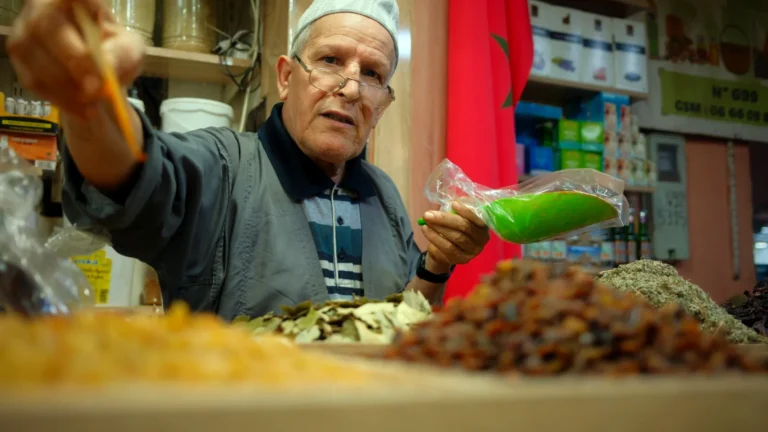
| Attarine | Spices, mainly cumin and oregano | Reached via Talaa Kebira |
| Chemaine | Nuts, dried fruit, ingredients for sweets such as hazelnut nougat | Location not stated |
| Nejjarine | Wooden items; carpenters finishing work | Near the Museum of Wooden Arts and Crafts and Fez’s oldest fountain |
| Achebine | Poultry and butchers | Near the Blue Gate |
| Sekkatine | Equipment for horses, mules and donkeys | Location not stated |
| Bellagine | Historically locks and wooden shoes; the trade has changed a lot | Location not stated |
The Barceló list is the only named breakdown I found. Its FAQ contradicts its main text on what Ain Allou and Attarine sell, and the Kiseria location is approximate, so treat the table as a starting point rather than a precise map. Our Fez attractions guide covers the sights between the souks.
What to buy in the Fes souks
Europe Up Close lists spices, herbs and dried roots (including a Moroccan curry blend and inexpensive saffron), olives, figs, dried fruit, silks, carpets, leather belts, filigree metal lamps, brasswork and wooden carvings. The author also saw snails and herbal remedies, which she did not buy. Her exchange rate (about 8 dirhams to the dollar) is from 2010, so ignore her figures, though her comparison that carpets sold for about one-half to one-third of US prices is her own and unverified.
For food to take home, our Morocco food guide explains what the spices and sweets are used for.
How to bargain in a Fes souk
- Haggling is expected and is part of the experience, according to Europe Up Close
- One approach is to offer about one-third of the asking price, then go back and forth; this is one traveller’s advice, not a rule
- Keep it friendly; carpet negotiations can take hours, often over mint tea
- Shake hands to seal a deal, as the Barceló article describes
- Walk away politely if the price is wrong; you can come back
Visiting the Chouara tannery
The tannery is the most visited sight in the leather area, and the Third Eye Traveller article is the most detailed source I found. It says the tannery is the largest in Fes, in Fes el Bali near the Saffarin Madrasa and the river. It gives the founding as the 11th century but also says the site is “well over 1000 years old”, and these claims conflict, so I cannot give a reliable age.
Practical points from the same article: there is no official entry fee, but touts and shops typically charge for a “view” or tour; the author suggests 20 to 50 MAD, paid 20, and says some travellers were quoted 200 MAD. There is no public viewpoint, because access is through leather shops, and the author recommends Shop Number 10 for photos. The smell is strong but you get used to it, and the article suggests bringing fresh mint. It does not recommend the visit to vegans, vegetarians or anyone sensitive to the slaughter of animals, because the skins come from camels, cows, goats and sheep.
Because guides and touts earn commission, prices of goods bought through them may be inflated. Our Morocco safety and etiquette guide explains how to handle persistent offers politely.
A suggested route through the souks
None of the sources gives a walking route, so this order is my own, built only from the locations they state. Anyone can start from the medina’s main street, Talaa Kebira, because the sources place the henna souk at its end and Attarine off it. Take the spices at Attarine first, continue to the hammering at Place Seffarine, then drop towards the leather area and the tannery. Nejjarine, with its wood workshops and fountain, and the Blue Gate area, where the poultry sellers are, can be added at the end.
| Stop | What to look for | Source of the location |
|---|---|---|
| Talaa Kebira | The main shopping street | Barceló |
| Henna souk | Henna and natural cosmetics | Barceló, end of Talaa Kebira |
| Attarine | Spices; cumin and oregano | Barceló, via Talaa Kebira |
| Place Seffarine | Coppersmiths and brass | Barceló |
| Chouara tannery | Leather and views through shops | Third Eye Traveller |
| Nejjarine | Woodwork and the oldest fountain | Barceló |
Expect to lose your way, and that is part of it. The Barceló article says wandering at will is the best way not to miss anything. If you plan to continue south after Fes, our Fes to Marrakech desert tour guide shows the usual route.
Practical tips for the souks
- Carry cash; most purchases are in cash, though some merchants take cards for large purchases
- Exchange money at banks or hotels, not on the street
- Carry small coins for tips
- Hire a trustworthy guide; the author suggests asking your hotel
- Keep your wallet secure, but do not be fearful
For cash and tipping details, see our Morocco money guide.
Respect, photos and quiet moments
The medina is a living neighbourhood as well as a shopping area, so a few habits help. Ask before photographing people or their stalls, step aside for carts and donkeys, and dress modestly. Friday is a prayer day, and Third Eye Traveller notes that some shops may close at certain times on Fridays for prayer, so plan your leather and tannery visit around that.
If the pressure to buy gets tiring, a pause for mint tea is a reasonable break. Europe Up Close describes tea as part of carpet negotiations, and Third Eye Traveller advises declining firmly when you do not want to buy. Souks are most pleasant when you treat them as a walk through working craft, not a race to buy.
Souk Fes Morocco: frequently asked questions
Which souks should I visit in Fes?
The coppersmiths’ at Place Seffarine, Attarine for spices, Nejjarine for wood and the Chouara tannery area for leather are the best-described stops.
Do I need a guide in the Fes souks?
Not required, but one source suggests hiring a trustworthy guide recommended by your hotel. Walking without one is also possible, though the medina is a maze.
How much should I pay to see the Chouara tannery?
There is no official fee. One traveller suggests 20 to 50 MAD for a view, and some were quoted 200 MAD, so agree a price first.
How do I bargain in Fes?
Expect to haggle. One traveller’s tip is to offer about a third of the asking price, then go back and forth, keeping it friendly.
Can I pay by card in the souks?
Mostly cash, according to Europe Up Close, though some merchants accept cards for large purchases.
Related guides
- Fez Morocco Medina: Walking Route, Sights, Tips
- The Ruined Garden Fes Morocco: Menu, Hours, Tips
- Hammam Fes Morocco: Traditional Baths vs Spas Explained
- Day Trips from Fes Morocco: 8 Easy Options and Tips
- Rabat to Fez Morocco: Train, Bus, Car and Stops
- Medina Marrakech Morocco: 7 Essential Stops
- Morocco Markets: Best Souks, What to Buy, Bargaining