
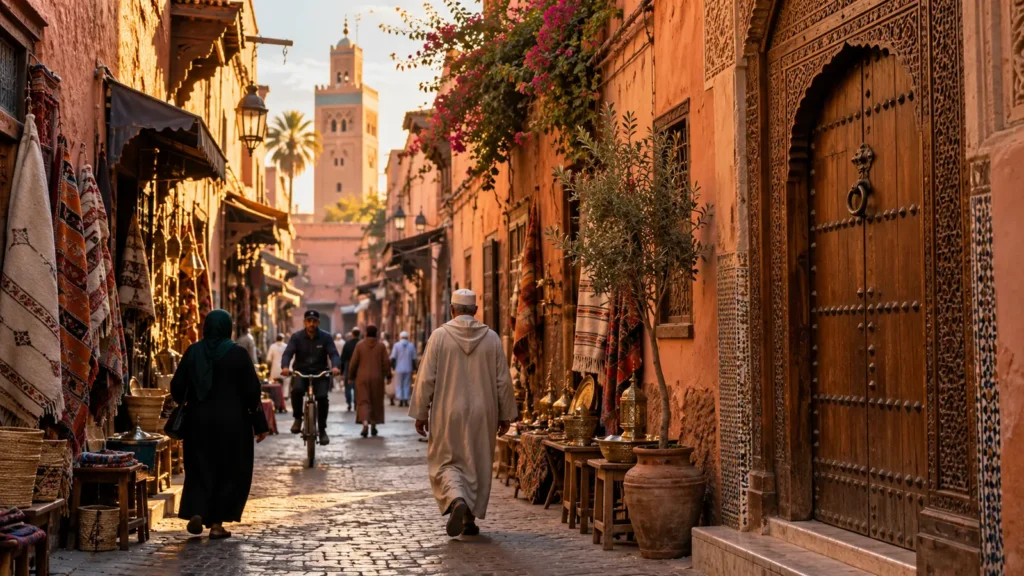
Medina Marrakech Morocco is a dense historic district of lanes, markets, monuments and residential quarters. The best visit is not a race through every landmark. Choose a clear route, start early and leave time to stop when a workshop, courtyard or café deserves attention.
Quick answer: begin around Jemaa el-Fna, continue through the souks toward Ben Youssef Madrasa, add one palace or museum, and finish near the Koutoubia gardens. A guided walk can help on the first morning, but independent exploration is possible with an offline map and realistic expectations.
Table of Contents
Medina Marrakech Morocco: seven essential stops
Jemaa el-Fna
Marrakech’s central square changes through the day. In the morning it is easier to cross and orient yourself; by evening, food stalls, performers and crowds transform the atmosphere. Watch belongings, agree on prices before accepting a service and ask before photographing people.
The souks
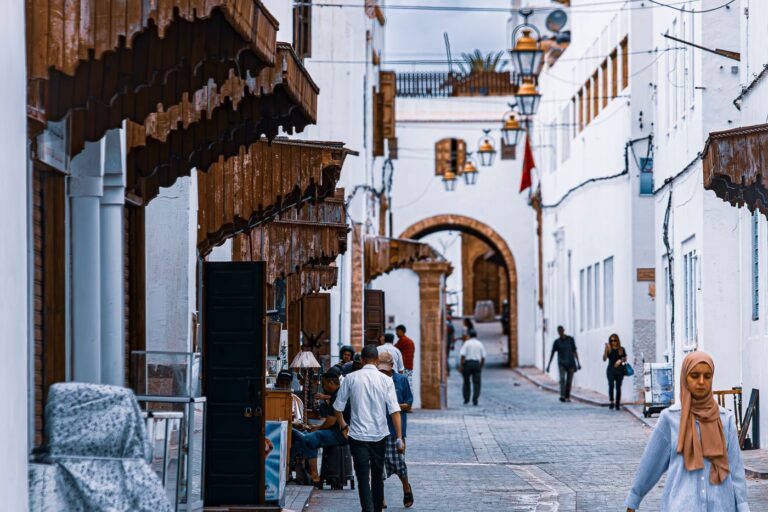
The market lanes north of the square are organised loosely by trade. Leather, metalwork, textiles, spices and everyday goods appear in different sections. Browse without pressure, compare quality and treat bargaining as a calm conversation rather than a contest.
Ben Youssef Madrasa
This historic religious school is known for its carved plaster, cedar work and central courtyard. Visitor access, ticketing and opening hours can change, so confirm current information before building a fixed schedule around it.
Mouassine and the neighbourhood lanes
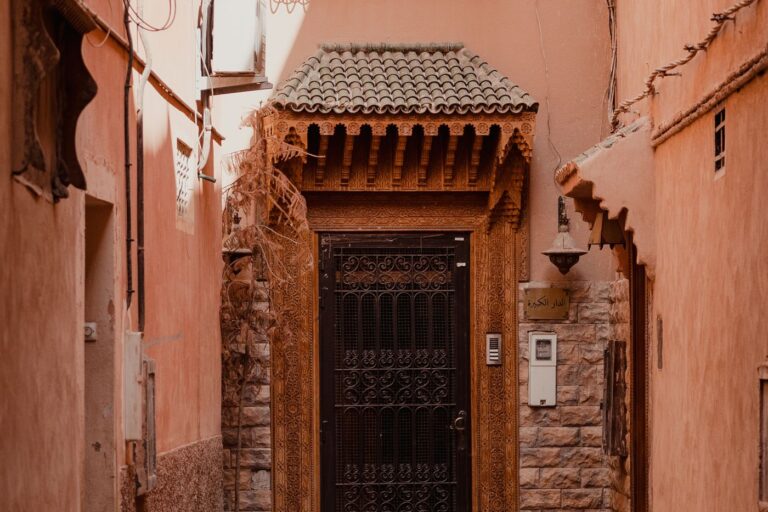
Mouassine provides a quieter look at residential and commercial life between major sights. Walk respectfully, avoid blocking doorways and remember that many lanes are homes rather than attractions.
Bahia Palace
Courtyards, painted ceilings and gardens make Bahia Palace a useful introduction to nineteenth-century elite architecture. It can become crowded; an early visit usually makes the details easier to appreciate.
Koutoubia Mosque and gardens
Non-Muslims do not enter the mosque, but the minaret and surrounding gardens are major landmarks. The open space also provides a helpful reference point when leaving or returning to the old city.
A responsible rooftop pause
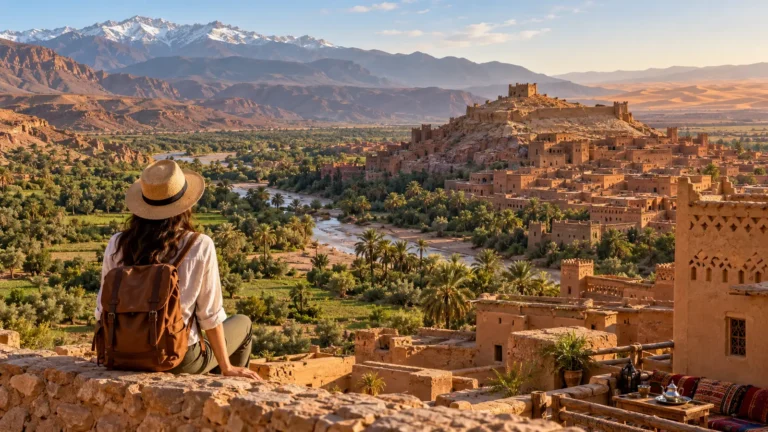
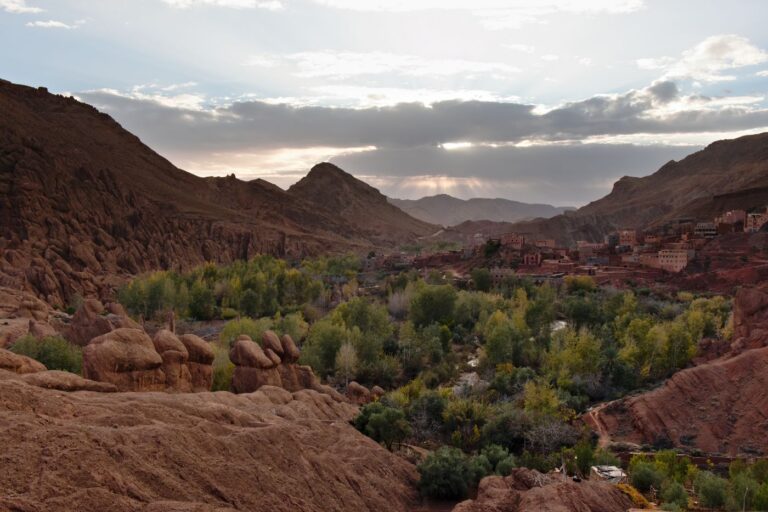
A rooftop café can provide a quiet break and a view of the Atlas on a clear day. Choose established venues, respect neighbouring homes and avoid flying drones without checking the law and local permissions.
| Area | Best for | Suggested time |
|---|---|---|
| Jemaa el-Fna | Orientation and evening atmosphere | 1–2 hours |
| Souks | Crafts and market life | 2 hours |
| Ben Youssef area | Architecture and history | 1–2 hours |
| Bahia–Mellah | Palace and nearby streets | 2–3 hours |
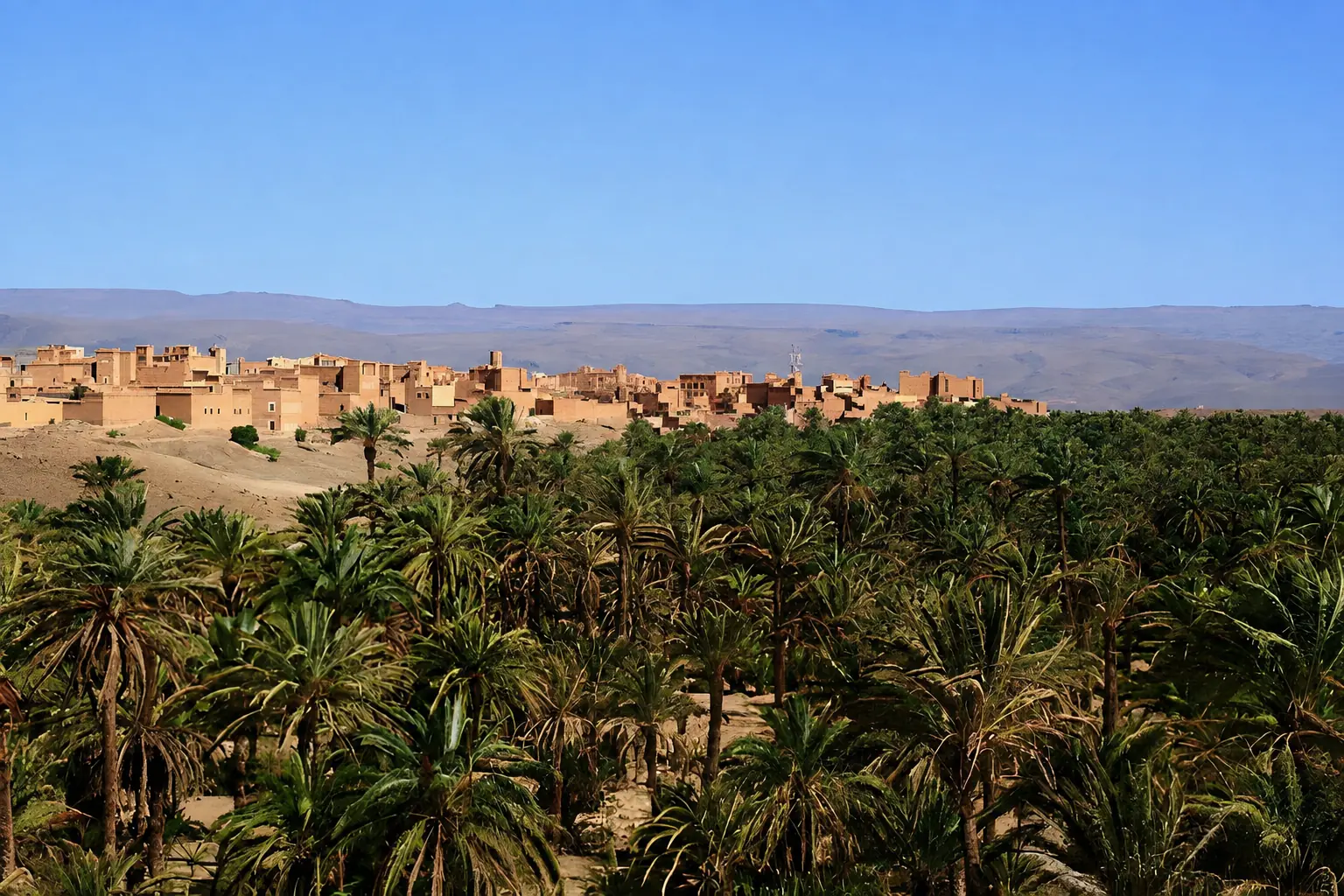
A practical Marrakech Medina walking route
For a first morning in Medina Marrakech Morocco, start at Koutoubia, cross Jemaa el-Fna and enter the souks toward Mouassine and Ben Youssef. Pause for lunch, then choose either Bahia Palace and the Mellah or a museum closer to the northern souks. Trying to combine every monument produces unnecessary backtracking.
An offline map helps, but GPS can be imprecise in narrow lanes. Save the name of the nearest gate to your accommodation and ask a verified guide, riad staff member or shopkeeper for direction when needed. Do not follow an unsolicited helper into an unfamiliar route.
Where to stay in Marrakech Medina
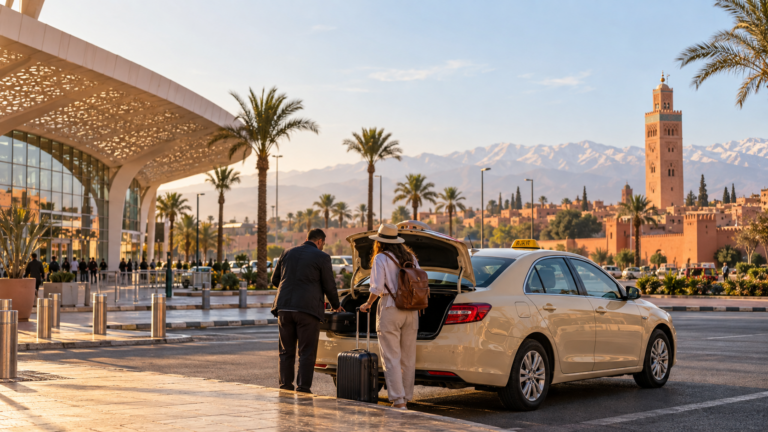
Accommodation in Medina Marrakech Morocco ranges from deep-lane riads to properties near the gates. A riad inside the old city offers atmosphere and walking access, but vehicles may stop several minutes away. Before booking, ask about the exact drop-off point, luggage help, stairs, night access and walking distance to a taxi stand. Travellers who value easy transfers may prefer accommodation near a gate rather than deep inside the lanes.
Noise varies by street and building. A room near Jemaa el-Fna may be convenient but lively at night, while a residential lane can be quieter yet harder to locate. Read recent reviews for the specific room type, not just the property overall.
Use our guide to activities in Morocco and Morocco tour itineraries to connect Marrakech with a realistic wider route.
Navigation, safety and etiquette
- Carry only the cash needed for the day and keep valuables secure.
- Ask before photographing a person, shop or workshop.
- Confirm prices before a service, guided shortcut or photograph.
- Step aside for carts, bicycles and motorbikes in narrow lanes.
- Use a registered guide for specialist history or an early orientation walk.
- Dress and behave respectfully near religious and residential spaces.
Official destination information is available from the Moroccan National Tourism Office. Recheck changing opening hours, ticket arrangements and transport close to your visit.
Frequently asked questions
Is Marrakech Medina safe?
Most visits are trouble-free with ordinary city precautions. Watch belongings, avoid isolated lanes late at night and decline unwanted assistance politely.
Do I need a guide?
A guide is useful for history and orientation, but not essential for every walk. Choose a licensed professional and agree on the route and price first.
How long should I spend in the Medina?
Two full days allow the main sights, markets and quieter neighbourhoods without turning the visit into a checklist.
Can cars enter the Medina?
Access is limited and varies by street. Many riads require a final walk from a gate or drop-off point.
What should I wear?
Light, modest clothing and comfortable closed shoes work well. Add sun protection and a layer for cooler evenings.
When is the best time to walk?
Early morning is calmer and cooler. Late afternoon is atmospheric, while midday can be hot and crowded.
Explore without rushing
A thoughtful Medina Marrakech Morocco itinerary rewards slow attention. Plan a few anchors, let the lanes between them provide the discovery and verify practical details shortly before each visit.