
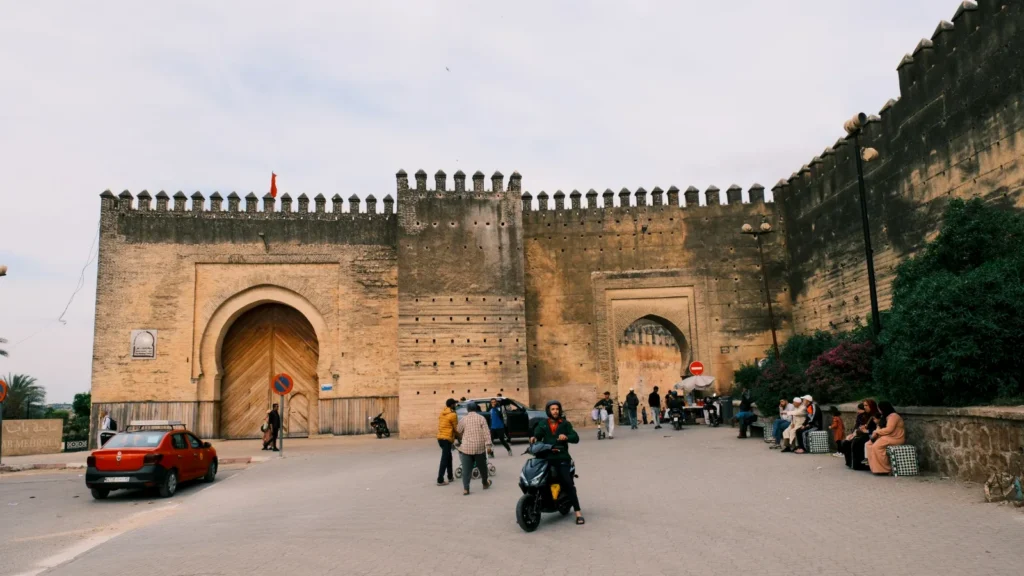
Fez Morocco attractions cluster inside the old walled medina of Fes el-Bali, so the best plan is to group them by area instead of crossing the city several times. Most are within walking distance of one another, but the lanes are narrow, hilly and confusing, and several key sights keep limited hours.
This guide groups the main sights by area, explains what non-Muslim visitors can and cannot enter, and finishes with a one-day and a two-day route. The medina itself is on the UNESCO World Heritage List, inscribed in 1981, as shown on UNESCO’s page for Morocco.
Table of Contents
Fez Morocco attractions inside the medina
Bab Bou Jeloud
The blue-tiled gate is the usual entry point to Fes el-Bali and a useful landmark when you are lost. The lanes that lead away from it, including the long main street known as Talaa Kebira, take you past food stalls, craft shops and several of the sights below.
Bou Inania Madrasa
This fourteenth-century Marinid college, built in the 1350s, is known for carved cedar, stucco and tilework. It is one of the few religious buildings in Morocco that non-Muslims can enter, which makes it an easy first stop. Check opening hours and any entry fee on the day.
Al-Attarine Madrasa
Smaller and quieter than Bou Inania, this madrasa dates to the 1320s and sits close to the Al-Qarawiyyin area and the spice and perfume sellers that give it its name. Its courtyard is compact, so go early or late to avoid crowding.
Al-Qarawiyyin
Founded in the ninth century as a mosque and place of learning, Al-Qarawiyyin remains a working religious site. Non-Muslims cannot enter, but you can see parts of the exterior and glimpse the courtyard from the doorways. Treat it as a respectful pause in the walk, not a photo stop.
Chouara Tannery and the leather quarter
The dye pits of Chouara tannery are the most photographed scene in Fez. You normally view them from the terraces of the surrounding leather shops, and the smell can be strong. Morning is the best time to see work under way. Expect a sales conversation at the shop; you are free to say no politely, though a small tip for the person who takes you up is customary.
Nejjarine Museum and Seffarine Square
The Nejjarine Museum of Wooden Arts and Crafts occupies a former eighteenth-century caravanserai and displays carved woodwork. Nearby, Seffarine Square is where coppersmiths work, so you can hear the hammering before you see it.
| Sight | Area | Best for | Non-Muslim access |
|---|---|---|---|
| Bab Bou Jeloud | Medina entrance | Orientation and first photographs | Open street |
| Bou Inania Madrasa | Fes el-Bali | Architecture and carved cedar | Yes, with entry fee |
| Al-Attarine Madrasa | Fes el-Bali | Quiet courtyard detail | Yes, with entry fee |
| Al-Qarawiyyin | Fes el-Bali | Exterior glimpse | Interior closed |
| Chouara Tannery | Fes el-Bali | Leather-making in the morning | Viewed from shop terraces |
| Nejjarine Museum | Fes el-Bali | Woodwork and building history | Yes, with entry fee |
| Merenid Tombs | Hill outside the walls | Views over the medina | Open viewpoint |
Beyond the medina: viewpoints, museums and Fez el-Jdid
The ruined Merenid Tombs, on a hill north of the medina, are the classic place for a panorama of Fes el-Bali; late afternoon light is usually kinder than midday. Nearby, Borj Nord is a late sixteenth-century fortress above the medina, and it has housed an arms museum, though you should check whether it is open before you climb.
In Fez el-Jdid, the newer royal quarter, the ornate gates of the Royal Palace can be seen from the square in front, but the palace is not open to the public. The old Jewish quarter, the mellah, lies close by. The Dar Batha Museum, a nineteenth-century palace with an Andalusian garden, and the Jnan Sbil gardens near Bab Bou Jeloud give you a calmer break from the lanes.
A simple one-day and two-day route
| Time | Plan | Notes |
|---|---|---|
| Day 1 morning | Bab Bou Jeloud, Bou Inania, Al-Attarine, Chouara Tannery | Start early; the tannery is best in the morning |
| Day 1 afternoon | Seffarine Square, Nejjarine Museum, then the Merenid Tombs | Finish with the viewpoint in late-afternoon light |
| Day 2 | Fez el-Jdid, the palace gates, the mellah, Dar Batha and Jnan Sbil | Slower pace with fewer lanes and more open space |
If you can only spare one day, do the first row and skip Fez el-Jdid. Our how many days in Morocco guide shows where Fez fits in a longer route.
Practical tips for visiting Fez
- Hire a licensed guide for the first morning, or ask your riad to arrange one, and agree the price and length before you start.
- Be wary of unofficial help in the lanes; kind directions can end in a request for payment.
- Wear comfortable shoes with grip. Lanes are uneven and steep, and mules and hand carts have priority.
- Opening hours change, especially around Friday prayers and holidays, so confirm them close to your visit.
- Visit in the early morning in summer, when the medina is cooler and quieter.
- The medina is difficult for wheelchairs and people with limited mobility; plan shorter outings or a private driver for the edge sights.
Most travellers reach Fez by train; our Morocco ONCF train guide explains booking and routes. Many continue towards the desert, as described in our Fez to Marrakech desert tour guide.
Common mistakes
- Staying only one night and treating the medina as a quick photo stop.
- Visiting the tannery at midday, when work is slowing down and the heat is strongest.
- Following the first leather shop that offers a free view without checking prices before you shop.
- Trying to see the medina, Fez el-Jdid and the viewpoints in a single afternoon.
Fez attractions: frequently asked questions
How many days do you need in Fez?
One full day covers the headline sights. Two nights is more comfortable, because the lanes slow you down and the best light for viewpoints comes late in the day.
Can non-Muslims enter Al-Qarawiyyin?
No. The interior is closed to non-Muslims, but you can see parts of the exterior and glimpse inside from the entrances.
When is the best time to see the Chouara Tannery?
Morning, when the tanners are at work and the light is good for photographs.
Is Fez worth visiting?
Yes, if you like historic architecture, crafts and a medina that still works as a neighbourhood. It is a poor fit if you want easy, flat sightseeing or only a single quick stop.
Choosing what to see first
If time is short, start at Bab Bou Jeloud, add Bou Inania and the tannery in the morning, and end at the Merenid Tombs. Add Fez el-Jdid and the museums on a second day. For a wider plan, our Morocco famous landmarks guide helps you compare Fez with other historic cities.
Related guides
- How Many Days in Chefchaouen? 1, 2 or 3 Days
- Hammam Fes Morocco: Traditional Baths vs Spas Explained
- Day Trips from Fes Morocco: 8 Easy Options and Tips
- Moulay Idriss Morocco: Visitor Guide to the Holy Town
- Travel to Chefchaouen Morocco: Routes, Times and Tips
- Rabat to Fez Morocco: Train, Bus, Car and Stops
- Souk Fes Morocco: Lanes, Tannery and Bargaining
- Fez Morocco Medina: Walking Route, Sights, Tips
- The Ruined Garden Fes Morocco: Menu, Hours, Tips