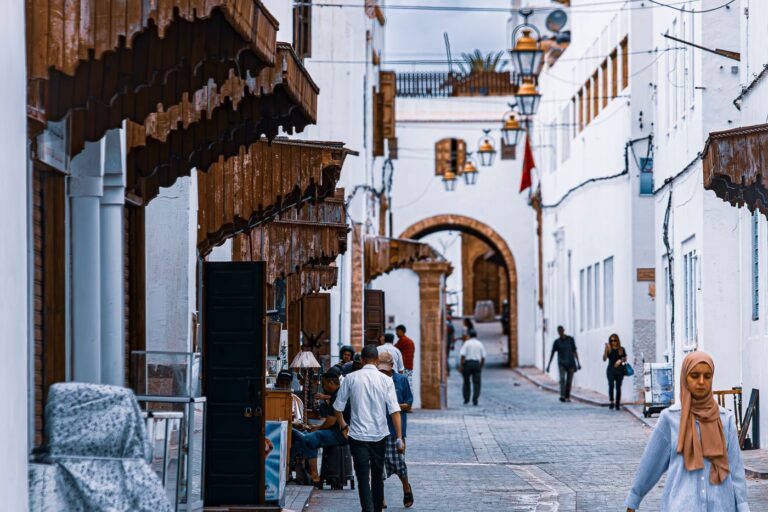

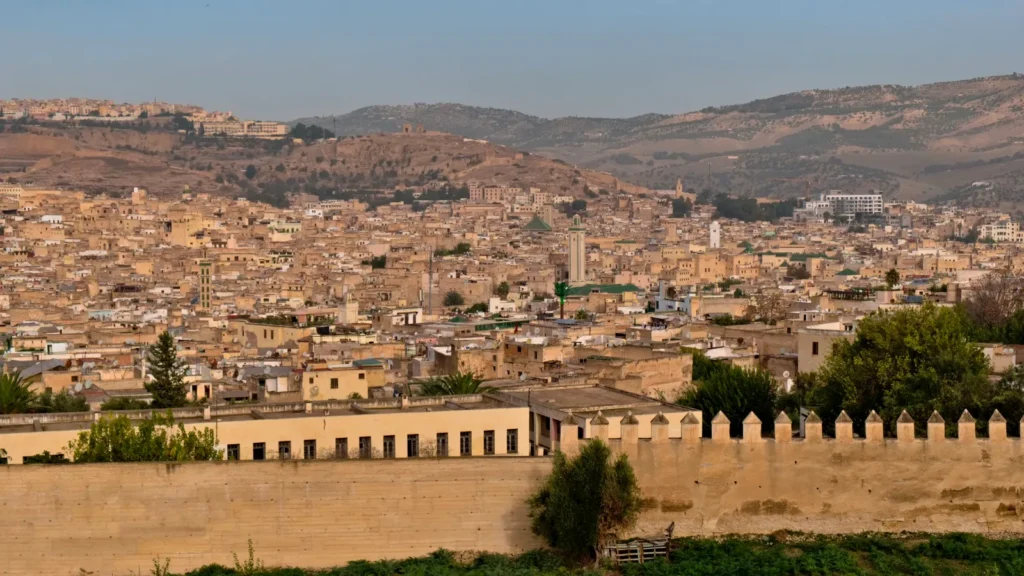
The Fez Morocco medina, Fes el-Bali, is a walled old city of narrow lanes, madrasas, workshops, fountains and riads, and it is one of the few places where you really do walk everywhere. It is also confusing: the lanes bend, the signs are few and the first hour usually involves being lost. A simple plan helps.
This guide covers what the medina is, how big it is claimed to be, how to enter and walk it, a route through the main sights, what each costs to enter and how to deal with touts. It draws on We Will Nomad (a self-guided walking tour last updated May 2024) and Atlas Obscura. Both give figures without citing sources, so I mark which claims are unverified. Prices are from the walking-tour page and may have changed.
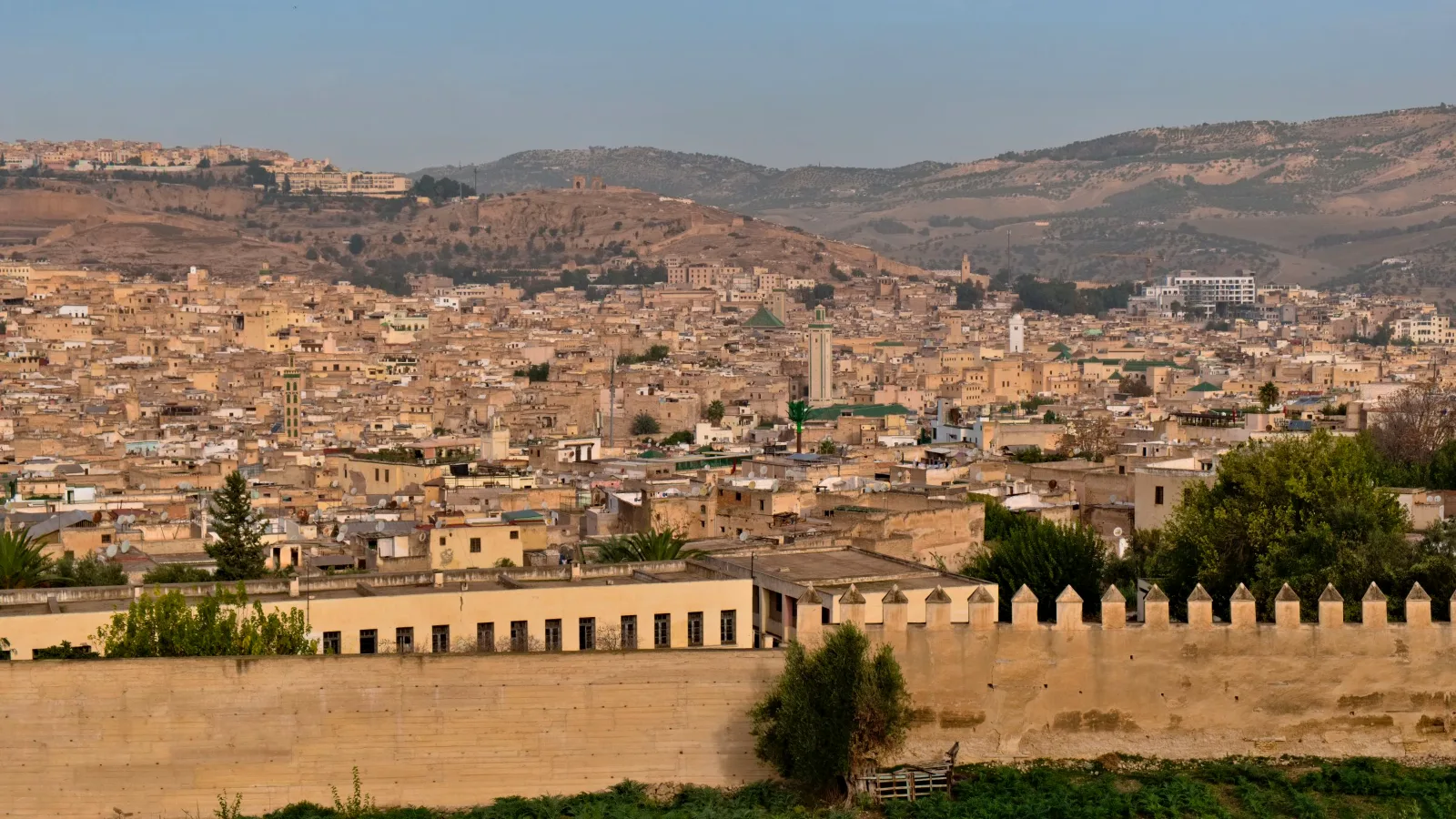
Table of Contents
Fez Morocco medina: the quick facts
| Question | Answer (and how reliable) |
|---|---|
| What is it? | Fes el-Bali, the old walled medina, one of the three main districts of Fes |
| UNESCO listing | Listed in 1981 (Atlas Obscura; no source cited) |
| Alleys | “A maze of 9,400 winding alleyways” (Atlas Obscura; unclear what is counted) |
| Car-free? | Described as “believed to be” the world’s largest car-free urban zone (hedged claim) |
| Capital period | Idrisid capital from 789 to 808 (Atlas Obscura; unsourced) |
| Main entrance | Bab Boujloud, the Blue Gate, on the west side |
| Main streets | Talaa Kebira and Talaa Sghira, linked by Rainbow Street |
The figures that sound most impressive, such as the alley count and the car-free ranking, come from a travel article with no cited source, so repeat them with a “claimed” attached. For official listing details see our UNESCO World Heritage sites guide.
Getting oriented: gates and main streets
We Will Nomad says Bab Boujloud is the main western entrance and dates to the 12th century, Almohad period, rebuilt in 1913 under the French; that claim is unsourced there. Cafés and shops surround the gate, and it is the easiest place to start. From there, the two main streets, Talaa Kebira and Talaa Sghira, run downhill into the medina, with Rainbow Street connecting them about 140 m from the gate.
Place Rcif sits at the end of Talaa Kebira and has transport links, according to the same page, which makes it a useful exit point. The route below also passes the henna souk, which the walking-tour page places along the same stretch.
A medina walking route
We Will Nomad offers a self-guided route of about four hours, adjustable. The order below follows it, with entry fees as quoted on that page and not confirmed elsewhere.
| # | Stop | Entry or access (as quoted) |
|---|---|---|
| 1 | Bab Boujloud | Free |
| 2 | Rainbow Street | Free; painted walls and artist shops |
| 3 | Bou Inania Madrasa | 20 dirhams; marble fountain, carved cedar ceiling, zellige |
| 4 | Dar al-Magana water clock | Opposite the madrasa |
| 5 | Place Nejjarine and the Nejjarine Museum of Wooden Arts and Crafts | Museum 20 dirhams; rooftop terrace |
| 6 | Henna souk | Free |
| 7 | Mausoleum of Moulay Idriss II | Closed to non-Muslims; view from outside |
| 8 | Al Attarine Madrasa | 20 dirhams; courtyard, upstairs rooms and rooftop open to non-Muslims |
| 9 | Al Qarawiyyin Mosque and University | Interior closed to non-Muslims |
| 10 | Place Seffarine | Coppersmiths’ square with a fountain |
| 11 | Chouara Tannery | Via leather shops or balconies |
The same page notes about 1 km between the Bou Inania area and Place Nejjarine. Allow a long morning or a full afternoon, and wear flat shoes with grip.
Sights worth stopping for
Bou Inania is the most visited madrasa. Al Attarine is smaller but its roof looks over Al Qarawiyyin. The page credits the water clock at Dar al-Magana to the engineer Ibn al-Haytham, which it does not source, and says its windows opened at different times to announce prayers and events. Al Qarawiyyin is described as founded in 859 by Fatima al-Fihri, with 14 gates, 270 columns and a 10th-century minaret, all unsourced there, so check an authoritative source before quoting.
The Chouara tannery, fountain squares and the Royal Palace (Dar el-Makhzen, not open to the public, viewable from outside) fill the list. Our Fez attractions guide covers the sights beyond the medina.
How the medina works without cars
A Museo del Camminare project page on car-free life in Fes says no motor vehicle may pass through the gates, with two exceptions: a stretch of Boulevard Ahmed Ben Mohammed Alaoui leading to Place R’cif and the street to Place Lalla Yeddouna. Mopeds occasionally enter despite the ban. Donkeys, donkey-drawn carts and handcarts face no restrictions, and the page says donkey carts collect household waste door to door. See Museo del Camminare.
The same page gives about 3.75 km2 and roughly 70,600 residents, citing a 2017 regional yearbook. It calls Fes the second-largest pedestrian city in the world, after Venice by area but ahead of it by population, which is confusingly worded and conflicts with the “world’s largest car-free zone” claim from Atlas Obscura. I would not repeat either superlative as fact. The practical point is the same: you will share narrow lanes with loaded donkeys, so step aside for them.
Pedestrians generally keep to the right, though less strictly than in Venice, according to the same page. It also says each quarter has its own small hospital for local emergencies and that street-sweepers clean regularly, which gives a sense that the medina is a working neighbourhood. It describes the medina as growing from two settlements: one founded by Idris I in 789 on the east bank of the Fes River and one by his son Idris II on the opposite bank, later unified by the Almoravids with a wall.
Dealing with touts and unofficial guides
The walking-tour page warns that touts will try to guide you and advises not letting them walk with you or guide you anywhere. At the tannery it says shops may expect a purchase in exchange for access, suggesting offering about 10 dirhams per person on entry. Those are one writer’s tips and amounts may differ. For wider guidance, see our Morocco safety and etiquette guide.
- Decide your route before you leave, and screenshot an offline map
- Be polite but firm with unofficial helpers; agree any fee first
- Ask your riad for a recommended guide if you want one
- Carry small notes for fees and tips
Where to stay inside the medina
Many travellers sleep in a riad inside the medina, which gives access on foot but means carrying luggage through narrow lanes, since cars cannot enter. The Atlas Obscura piece notes riads are sometimes hidden in the alleys. Our riad vs hotel guide compares the options, and our Marrakech medina guide shows how Fes compares with the other imperial city.
Fez Morocco medina: frequently asked questions
How big is the Fez medina?
Atlas Obscura describes about 9,400 alleyways, though it is unclear what is counted and no source is given.
Is the Fez medina car-free?
It is described as believed to be the world’s largest car-free urban zone, a hedged claim. In practice you walk or use handcarts and donkeys.
Can I enter the Qarawiyyin Mosque?
Non-Muslims cannot enter the interior, according to We Will Nomad, but you can see it from outside or from nearby rooftops.
How long do I need for the Fez medina?
The self-guided route takes about four hours, and many visitors spend a full day.
Do I need a guide?
Not required, but the lanes are confusing. Use a recommended guide or an offline map, and decline unofficial offers.