
Where is hot in November? Morocco is no longer hot in the summer sense, but the south still gives you real warmth: Laayoune reaches 26°C, Dakhla 25°C and Agadir 24°C. Marrakech and the pre-Sahara are warm by day and noticeably cooler at night, and the north begins to feel like autumn, with Tangier receiving more rain in November than in any other month except December.
This guide ranks the warmest places in Morocco in November with long-term averages, adds rain, sunshine, record highs and sea temperatures, and explains how much the temperature drops after sunset, so you can choose between coast, city and desert. For a flexible plan, our things to do in Morocco guide can help you match activities to the weather.
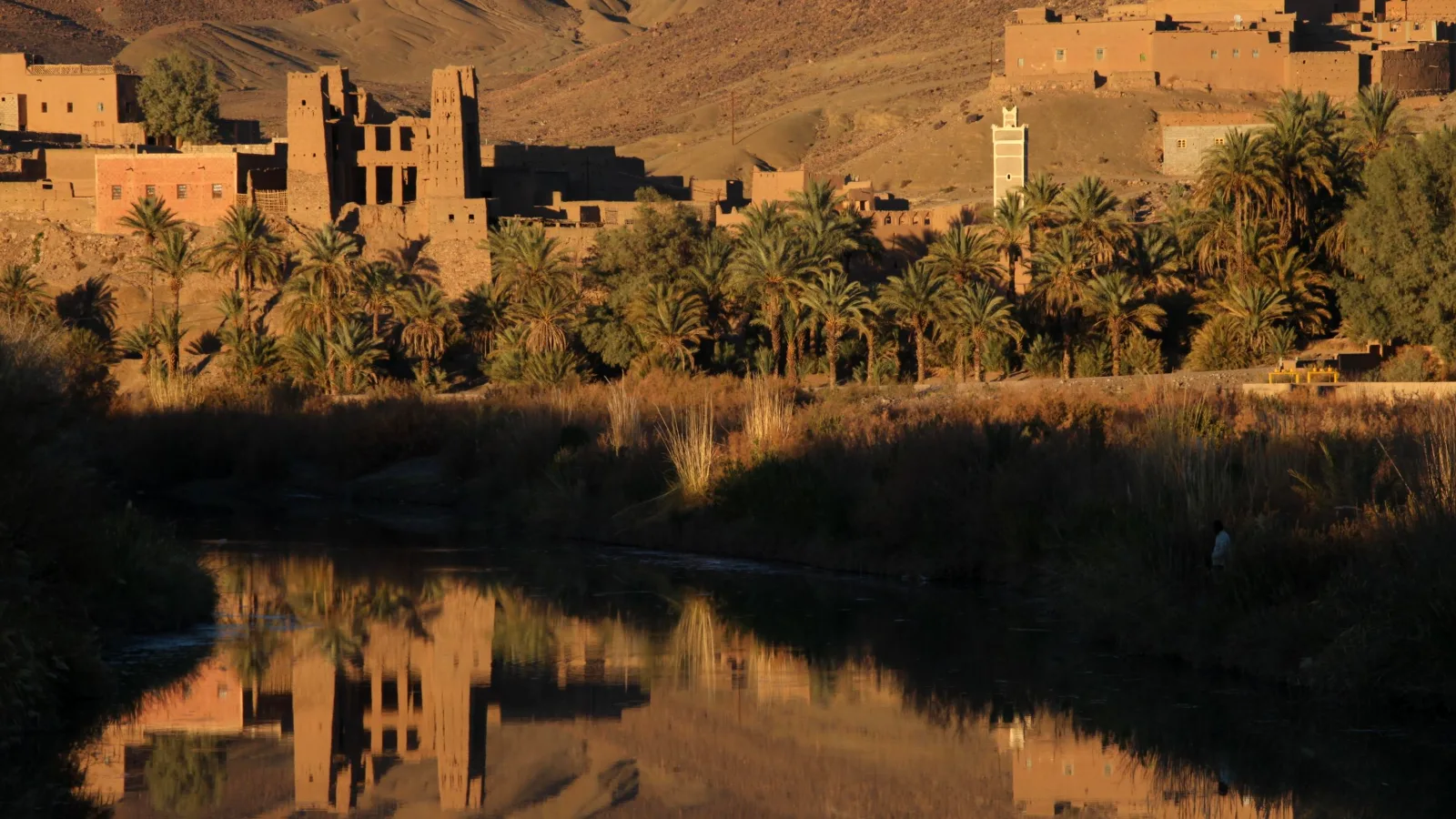
Table of Contents
Where is hot in November? The short answer
The warmest places in Morocco in November are Laayoune at 26°C and Dakhla at 25°C, followed by Agadir at 24°C and Marrakech at 23°C. Ouarzazate reaches 22°C, Errachidia, Essaouira and Casablanca 21°C, and Tangier and Fez 20°C. Nights are mild in Dakhla at 18°C but drop to about 8°C in Ouarzazate, Errachidia and Fez. So the southern Atlantic coast is the clear winner for warmth, and Marrakech is the best warm city.
- Warmest by day: Laayoune (26°C), Dakhla (25°C) and Agadir (24°C)
- Mildest nights: Dakhla (18°C), Laayoune (16°C) and Essaouira (15°C)
- Warmest sea: Dakhla (21°C), Casablanca (20.2°C) and Essaouira (20°C)
- Sunniest of the main cities: Ouarzazate (8 hours a day), then Agadir (7.5 hours)
- Wettest: Tangier (125 mm over 10 days), Fez (66 mm) and Casablanca (55 mm)
November weather by city: temperature, rain and sun
To see where is hot in November city by city, the table lists average highs, lows, rainfall and sunshine. These long-term averages show the gradual cooling from October. The gap between day and night in the interior widens, which is why layers are essential.
| City | Average high | Average low | Rain (rain days) | Sun hours per day |
|---|---|---|---|---|
| Laayoune | 26°C | 16°C | ≈5 mm (2 days) | — |
| Dakhla | 25°C | 18°C | ≈5 mm (1 day) | — |
| Agadir | 24°C | 13°C | 45 mm (5 days) | 7.5 |
| Marrakech | 23°C | 11°C | 40 mm (7 days) | 7 |
| Ouarzazate | 22°C | 8°C | 10.4 mm (2 days) | 8 |
| Casablanca | 21°C | 13°C | 55 mm (7 days) | 6.5 |
| Essaouira | 21°C | 15°C | 50 mm (7 days) | 6.5 |
| Errachidia | 21°C | 8°C | 11 mm (2 days) | — |
| Fez | 20°C | 8°C | 66 mm (6 days) | 7 |
| Tangier | 20°C | 12°C | 125 mm (10 days) | 6 |
November is the first properly wet month in the north and on the Atlantic coast. Tangier averages about 125 mm over ten days, Fez about 66 mm and Casablanca about 55 mm, while Marrakech receives about 40 mm over seven days. The south is the exception, with Dakhla and Laayoune close to dry. The Marrakesh climate page notes that November can bring rain and cold nights, but also recommends late September to mid-November as a good time to visit. Rainfall for Dakhla and Laayoune is rounded to the nearest 5 mm in the source tables.
How hot can it get in November? Records and hot-wind days
A warm November day is still possible. The table shows that Marrakech has recorded 34°C in November, Fez 32.3°C, Ouarzazate 31°C and Errachidia 29.8°C in single warm spells. These highs are rare, but they are a reminder that a light shirt is useful even in late autumn.
| City | Highest value cited | Lowest value cited |
|---|---|---|
| Marrakech | 34°C (2007) | 2.4°C |
| Ouarzazate | 31°C (1999) | −2°C (1999) |
| Fez | 32.3°C (2020) | — |
| Errachidia | 29.8°C (2012) | — |
The cold is also real: Marrakech has had a November night as low as 2.4°C, and Ouarzazate has dropped to −2°C. If you plan a desert night, assume it will feel cold after sunset. The national table at Climates to Travel also notes that Atlantic rain falls mostly between November and March, sometimes intensely.
Sea temperature and swimming in November
The sea is cooling from its summer peak, but it is still not cold. The tables show 19°C in Tangier, 19.5°C in Agadir, 20°C in Essaouira, 20.2°C in Casablanca and 21°C in Dakhla.
| Coastal city | Average sea temperature |
|---|---|
| Agadir | 19.5°C |
| Casablanca | 20.2°C |
| Tangier | 19°C |
| Essaouira | 20°C |
| Dakhla | 21°C |
Dakhla remains the warmest, and Agadir has the best combination of sunshine and a still-swimmable sea on the main Atlantic beaches. The swimming season is effectively over for most visitors by the end of the month, so think of November as a month for walking and water sports with a wetsuit.
Best places to go in November for warm weather
Agadir and Taghazout: the easy winter-sun choice
Agadir has 24°C days, 7.5 hours of sun a day and a long, flat beach promenade, while Taghazout is the base for surfers. The sea is about 19.5°C, which is cool but comfortable with a wetsuit. Our Agadir guide includes beaches, the souk and day trips.
Dakhla and Laayoune: the warmest southern coast
Dakhla has the mildest nights in the country at 18°C, with 25°C days and almost no rain. Laayoune is warmer by day at 26°C. Both are quiet in November and suit travellers who want wide skies, wind sports and desert scenery.
Marrakech and the desert: warm days, cool evenings
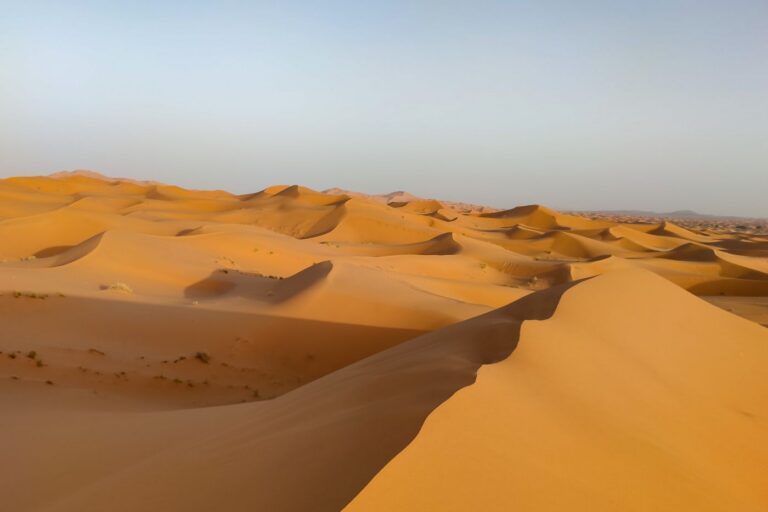
Marrakech at 23°C is excellent for sightseeing and rooftop dinners, though evenings need a jacket. If you plan to continue to the dunes, our Marrakech to Merzouga tour guide shows how to do it in a few days. Nights in the Sahara can drop to 8°C, so bring warm clothing.
Where it is not hot in November
If you are asking where is hot in November and expect warmth, avoid Fez, Tangier and the mountains. Fez and Tangier average only 20°C by day, and Tangier has about 6 hours of sun and 125 mm of rain. High Atlas trails get colder and snow can arrive on the highest peaks, though valley walks are still pleasant; our Morocco hiking tours guide explains how to choose the right route.
November compared with October and December
Compared with October, the average high in Marrakech moves from 28°C to 23°C, in Ouarzazate from 28°C to 22°C, in Agadir from 26°C to 24°C and in Tangier from 25°C to 20°C. The sea at Agadir goes from 20.5°C to 19.5°C.
November is when the interior and the north catch up with the coast: Marrakech falls about 5°C from October and Ouarzazate almost 6°C, while Agadir drops only about 2°C. The sea cools by about 1°C in Agadir. Rain becomes a factor for the first time since spring, so it is a good month to be flexible, and December is cooler again.
What to pack and how to plan for November
- Layers: T-shirt, sweater and warm jacket for evenings
- A waterproof jacket or compact umbrella for the north and Atlantic coast
- Closed shoes for wet streets and desert paths
- Sunscreen, sunglasses and a hat for sunny middays
- A wetsuit if you plan to surf, since the sea is about 19 to 20°C
November is a good month for city and coastal combinations. If you are unsure how to dress for medinas and rural areas, read our what to wear in Morocco guide, and check forecasts before booking desert nights.
November in Morocco: frequently asked questions
Where is the warmest place in Morocco in November?
Laayoune is the warmest, with an average high of about 26°C, followed by Dakhla at 25°C and Agadir at 24°C.
Is it hot enough to swim in Morocco in November?
The sea is about 19 to 21°C, so it is fresh but not unbearable. Dakhla is warmest at 21°C and Agadir sits at 19.5°C, though many people prefer pools.
Is November a good month for the Sahara?
Yes for daytime, with highs around 21 to 22°C, but nights fall to about 8°C, so bring warm sleeping gear.
Where is hot in November for a short trip?
Marrakech is the best city option for sun and culture, while Agadir is the best for a beach break.
Is November rainy in Morocco?
Yes in the north and on the Atlantic coast: Tangier averages about 125 mm over ten days, Fez 66 mm and Casablanca 55 mm. The far south and the Sahara are much drier.
Where is hot in other months
Planning around the weather? See our best time to visit Morocco month-by-month finder, or compare the same question for another month: