
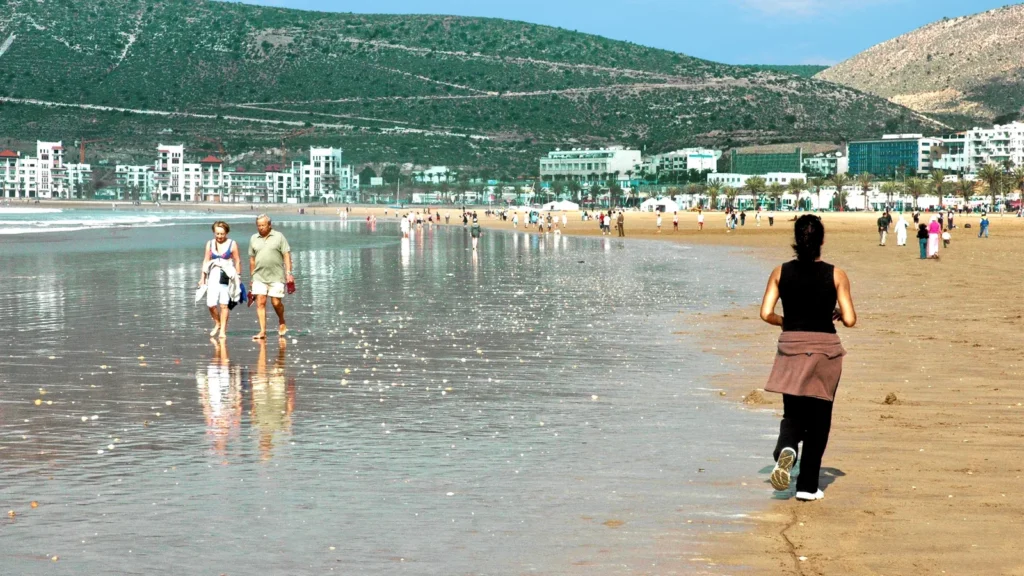
Where is hot in February? In Morocco the far south and the Atlantic coast warm up first, with Laayoune at 23°C and Dakhla and Agadir at 22°C, while the interior and the north are still firmly in winter. February is also the coolest sea month of the year, yet the sun is strong, skies are often clear, and by the end of the month the first signs of spring appear in the valleys.
Below you will find average temperatures, rain and sunshine for ten Moroccan cities, the highest and lowest values the climate tables cite, and sea temperatures along the coast, so you can judge what 22°C really means in Agadir compared with the Sahara. Use it alongside our things to do in Morocco guide when you start choosing activities.
Table of Contents
Where is hot in February? The short answer
The warmest places in Morocco in February are Laayoune at 23°C, then Dakhla and Agadir at 22°C, with Marrakech at 21°C. Ouarzazate reaches 19°C and Errachidia 18°C, while Casablanca, Essaouira, Tangier and Fez are between 17 and 19°C. Nights stay mildest in Dakhla (15°C) and Laayoune (13°C), and coldest in the desert towns and Fez, where lows are about 5°C. If you want to feel warm outdoors from morning to evening, head south along the Atlantic coast.
- Warmest by day: Laayoune (23°C), Dakhla and Agadir (22°C)
- Mildest nights: Dakhla (15°C), Laayoune (13°C) and Essaouira (12°C)
- Sunniest of the main cities: Ouarzazate (8.5 hours a day), Agadir (8 hours)
- Wettest: Tangier (60 mm over 9 days) and Casablanca (55 mm over 7 days)
- Coldest nights: Ouarzazate, Errachidia and Fez (about 5°C)
February weather by city: temperature, rain and sun
To see where is hot in February city by city, the table below shows average daytime highs, night-time lows, rainfall and sunshine. Use the lows to decide how many layers you need, because the gap between day and night is the main feature of Moroccan winter.
| City | Average high | Average low | Rain (rain days) | Sun hours per day |
|---|---|---|---|---|
| Laayoune | 23°C | 13°C | ≈10 mm (2 days) | — |
| Dakhla | 22°C | 15°C | ≈5 mm (1 day) | — |
| Agadir | 22°C | 10°C | 40 mm (6 days) | 8 |
| Marrakech | 21°C | 8°C | 40 mm (8 days) | 7.5 |
| Ouarzazate | 19°C | 5°C | 19.9 mm (2 days) | 8.5 |
| Essaouira | 19°C | 12°C | 40 mm (7 days) | 7.5 |
| Errachidia | 18°C | 5°C | 15 mm (2 days) | — |
| Casablanca | 18°C | 10°C | 55 mm (7 days) | 6.5 |
| Fez | 17°C | 5°C | 54 mm (6 days) | 7 |
| Tangier | 17°C | 8°C | 60 mm (9 days) | 6 |
February is one of the wetter months on the Atlantic and Mediterranean coasts, but the south is dry: Dakhla and Laayoune receive very little rain, roughly 5 to 10 mm, and Ouarzazate gets about 20 mm over only two days. Ouarzazate is also the sunniest main city at 8.5 hours a day. Overview tables are available at Climates to Travel. Rainfall for Dakhla and Laayoune is rounded to the nearest 5 mm in the source tables.
How hot can it get in February? Records and hot-wind days
February can be warmer than the averages suggest when hot desert air arrives. The Casablanca page notes that such winds can bring winter highs of 28 to 30°C, and the table below shows that Marrakech has touched 33°C and Fez 30.5°C in single warm Februaries. These are exceptions rather than a plan.
| City | Highest value cited | Lowest value cited |
|---|---|---|
| Marrakech | 33.1°C (2010) | −1.5°C |
| Ouarzazate | 28.1°C (2010) | −3.2°C (2012) |
| Fez | 30.5°C (2010) | — |
| Errachidia | 28.2°C (2016) | — |
The same table shows the cold side. Marrakech has recorded nights as low as −1.5°C and Ouarzazate as low as −3.2°C in February, so frost on a clear night is possible even in cities that feel mild at midday.
Sea temperature and swimming in February
February is the coolest month for the sea along the whole coast. The tables put it at 16°C in Tangier and 17°C in Agadir, Casablanca and Essaouira, with Dakhla slightly warmer at 18°C. That is cold enough that swimming is brief at best.
| Coastal city | Average sea temperature |
|---|---|
| Agadir | 17°C |
| Casablanca | 17°C |
| Tangier | 16°C |
| Essaouira | 17°C |
| Dakhla | 18°C |
Agadir is the most comfortable base for a beach-side stay in February because it has the most sunshine on the Atlantic side, at about 8 hours a day, and 22°C afternoons. Surfers still head to nearby breaks, usually in a wetsuit; see the Agadir climate table for the monthly sea figures.
Best places to go in February for warm weather
Agadir and Taghazout: warm days by the ocean
Agadir is the easiest warm destination in February, with 22°C afternoons, about 8 hours of sun a day and a sea around 17°C. It is a good month for walking, cycling and golf, and for cooling off in a hotel pool. There are surf spots close to the city, for example around Taghazout, and surfers wear wetsuits in the cool sea.
Marrakech: spring light without the summer heat
At 21°C in the afternoon, Marrakech is comfortable for sightseeing without hiding from the sun, with about 7.5 hours of sunshine a day. Evenings are cooler at about 8°C, so a jacket matters, and around 40 mm of rain falls on eight days. Our Marrakech attractions guide lists palaces, gardens and souks that suit this kind of weather.
Laayoune and Dakhla: the warmest southern coast
These are the warmest places in the country in February, with highs of 22 to 23°C and mild nights of 13 to 15°C. They are quieter than Agadir and suit travellers who want wide beaches, desert scenery and kitesurfing. Mist can hang over Dakhla in the early morning, and the ocean wind is steady, so plan for sun and wind rather than long swims.
Where it is not hot in February
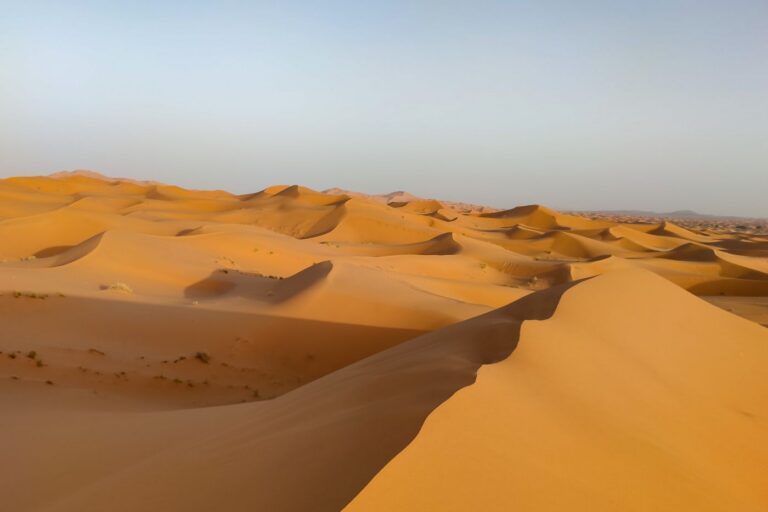
If you are asking where is hot in February and expecting heat, avoid the north and the mountains. Tangier and Fez stay around 17°C by day with frequent rain, and Tangier receives only 6 hours of sun a day. The Middle Atlas is cold and snow remains possible on the high peaks. The Sahara is a special case: the days are clear and pleasant at 18 to 19°C, but a night in a desert camp can drop to roughly 5°C, and February is one of the wetter months on the desert edge, with Errachidia averaging about 15 mm.
February compared with January and March
Compared with January, the average high in Marrakech moves from 19°C to 21°C, in Ouarzazate from 17°C to 19°C, in Agadir from 21°C to 22°C and in Tangier from 17°C to 17°C. The sea at Agadir goes from 17.5°C to 17°C.
February is only slightly warmer than January: Marrakech gains about 1.5°C and Agadir about 1°C, but the real gain is in the light, since daylight and sunshine increase steadily. By March the interior warms quickly, so travellers who can wait a few weeks will find noticeably warmer afternoons and shorter, less chilly nights. For a trip inside February, the south coast and Agadir remain the safest choices for sunshine.
What to pack and how to plan for February
- Layers: a T-shirt for the day plus a fleece and windproof jacket for the evening
- Sunglasses and sunscreen, because winter sun in clear air still burns
- Walking shoes for medina streets and desert tracks
- A scarf, which doubles as dust protection and warmth in the Sahara
- A compact umbrella if you will visit Tangier, Fez or the northern coast
If your trip includes the dunes, our Sahara packing list explains what to bring for cold desert nights, and the Marrakech to Merzouga tour guide shows how to fit it into a few days. For a flexible winter loop, consider our Morocco road trip guide.
February in Morocco: frequently asked questions
Where is the warmest place in Morocco in February?
Laayoune is warmest at about 23°C on average, followed by Dakhla and Agadir at 22°C. Marrakech is close behind at 21°C.
Is the sea warm enough to swim in February in Morocco?
Not really. The sea is at its coolest, around 16 to 18°C depending on the city, so most people stay in the pool. Dakhla at 18°C and Agadir at 17°C are the most comfortable places to get your feet wet.
Is February a good month for the Sahara?
Yes for daytime activity, with highs around 18 to 19°C and dry air. Be ready for nights near 5°C and bring warm bedding or sleeping bags.
Where is hot in February for a short city break?
Marrakech is the best choice for a city break because it is sunny, mild by day and easy to reach, though evenings need a jacket and occasional rain is possible.
Is February rainy in Morocco?
The north and the Atlantic coast are wetter: Tangier gets about 60 mm over 9 days and Casablanca about 55 mm over 7 days. Dakhla, Laayoune and Ouarzazate are far drier.
Where is hot in other months
Planning around the weather? See our best time to visit Morocco month-by-month finder, or compare the same question for another month: