
Where is hot in July? Morocco has some of the hottest summer weather in North Africa, and July is the peak. Errachidia and Ouarzazate average 39°C, Marrakech 38°C, and the climate tables record single days above 49°C in Marrakech. Yet the Atlantic coast is mild at 22 to 26°C, so one country gives you both extremes depending on which road you take.
This guide shows July weather for ten Moroccan cities, adds rain, sunshine, record highs and sea temperatures, and explains how to cope if you go inland. If you are planning a Sahara visit anyway, our Sahara packing guide will help you prepare.
Table of Contents
Where is hot in July? The short answer
The hottest places in Morocco in July are Errachidia and Ouarzazate at 39°C, Marrakech at 38°C and Fez at 35°C. Laayoune and Tangier reach 29°C, Agadir and Casablanca 26°C, Dakhla 25°C and Essaouira only 22°C. Desert nights remain very warm, with lows of 23 to 26°C. The record shows how extreme it can become: Errachidia has reached about 43.7°C in July and Marrakech nearly 50°C.
- Hottest by day: Errachidia and Ouarzazate (39°C), Marrakech (38°C)
- Warmest nights: Errachidia (26°C), Ouarzazate (23°C), Marrakech (21°C)
- Sunniest of the main cities: Marrakech, Fez and Tangier (11 hours a day)
- Driest: Essaouira, Agadir and Casablanca (no rain), then Marrakech and Fez (about 1 mm)
- Mildest coast: Essaouira (22°C), Dakhla (25°C), then Agadir and Casablanca (26°C)
July weather by city: temperature, rain and sun
To see where is hot in July city by city, the table lists average highs, lows, rainfall and sunshine. These are everyday values rather than heatwave peaks, which can be several degrees higher inland.
| City | Average high | Average low | Rain (rain days) | Sun hours per day |
|---|---|---|---|---|
| Errachidia | 39°C | 26°C | 6 mm (2 days) | — |
| Ouarzazate | 39°C | 23°C | 4.2 mm (1 day) | 10 |
| Marrakech | 38°C | 21°C | 1 mm (1 day) | 11 |
| Fez | 35°C | 18°C | 1 mm (0 days) | 11 |
| Tangier | 29°C | 19°C | 2 mm (1 day) | 11 |
| Laayoune | 29°C | 20°C | ≈0 mm (0 days) | — |
| Agadir | 26°C | 19°C | 0 mm (0 days) | 8 |
| Casablanca | 26°C | 20°C | 0 mm (0 days) | 10 |
| Dakhla | 25°C | 19°C | ≈0 mm (0 days) | — |
| Essaouira | 22°C | 18°C | 0 mm (0 days) | 9.5 |
Rain is almost absent: Marrakech and Fez record about 1 mm, the coast zero, and even Errachidia only about 6 mm. Sunshine reaches 11 hours a day in Marrakech, Fez and Tangier. The national table at Climates to Travel also notes that Marrakech can exceed 45°C in the worst moments, and that a cool Atlantic current keeps the south coast fresh. Rainfall for Dakhla and Laayoune is rounded to the nearest 5 mm in the source tables.
How hot can it get in July? Records and hot-wind days
July holds the highest values in the whole climate table. Marrakech has reached 49.6°C, Fez 46.4°C, Errachidia 43.7°C and Ouarzazate 42.8°C. Even Tangier, which averages 29°C, has a typical hot-day high of about 36.5°C and a recorded 43.1°C in July 2004, according to the Tangier climate page.
| City | Highest value cited | Lowest value cited |
|---|---|---|
| Marrakech | 49.6°C (2012) | 14.2°C |
| Ouarzazate | 42.8°C (2017) | 17.3°C (1992) |
| Fez | 46.4°C (2017) | — |
| Errachidia | 43.7°C (2017) | — |
Warm nights matter as much as hot days. The coolest July night in Marrakech in the table is 14.2°C and in Ouarzazate 17.3°C, so air-conditioning or a cooling pool really does help you sleep. On the coast, the Agadir and Essaouira pages note that hot desert wind episodes can push summer temperatures above 40°C, although they are rarer than inland.
Sea temperature and swimming in July
July is the first month when the sea feels properly summery on the Atlantic side. The tables show 20.5°C in Agadir, 21°C in Essaouira, 22.5°C in Tangier, 22.7°C in Casablanca and 20°C in Dakhla. The Agadir page recommends July to September for a beach holiday there.
| Coastal city | Average sea temperature |
|---|---|
| Agadir | 20.5°C |
| Casablanca | 22.7°C |
| Tangier | 22.5°C |
| Essaouira | 21°C |
| Dakhla | 20°C |
Casablanca and Tangier have the warmest sea in the table, and the Casablanca page describes July to September as its beach season. Dakhla is at its best slightly later, from August to October, when the sea and the wind conditions are most comfortable.
Best places to go in July for warm weather
Errachidia and Merzouga: the hottest in the country
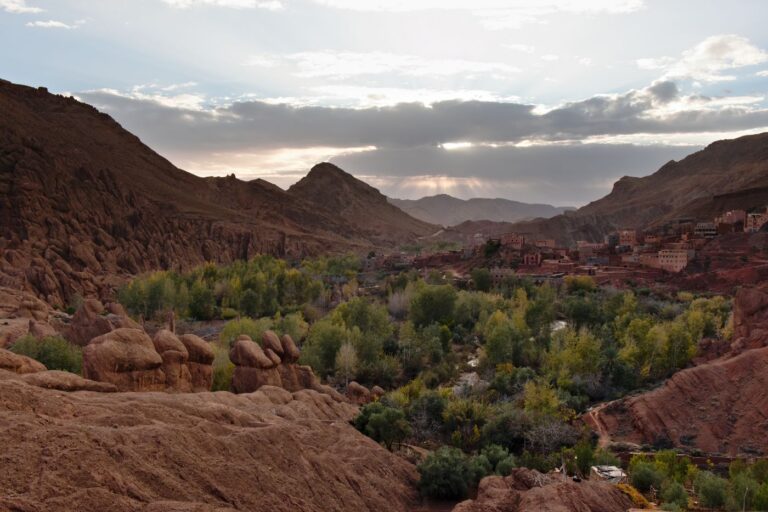
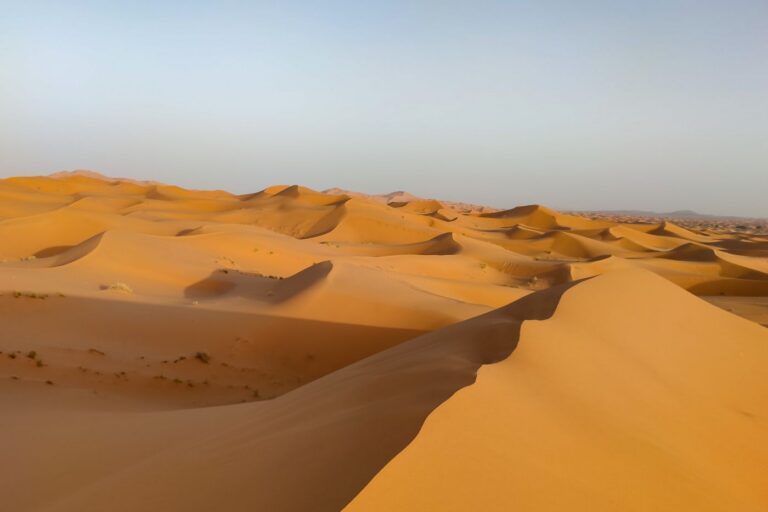
The eastern desert is the answer if you are looking for the hottest place in Morocco in July. Daytime highs average 39°C and nights stay around 26°C, so camps are warm even after sunset. Rain is almost absent, with about 6 mm in the month, and travel is best at dawn and dusk.
Marrakech: very hot but manageable
Marrakech has 38°C afternoons, 11 hours of sun a day and warm nights, yet the heat is manageable with a pool or an air-conditioned room. Visit the medina early, spend midday indoors and enjoy pools or hammams. Our Marrakech spa guide lists places that give a break from the heat.
Agadir and Dakhla: warm coast with pleasant breezes
Agadir at 26°C and Dakhla at 25°C feel mild after the interior, and the sea is warm enough to swim comfortably, at about 20 to 20.5°C. Read our Agadir guide for a base with beaches and services.
Where it is not hot in July
If you are asking where is hot in July and want to avoid it, choose Essaouira at 22°C, the Casablanca to Rabat coast at about 26 to 27°C, or the mountains. The High Atlas villages and trails are several degrees cooler than the plains, and our Morocco hiking tours guide explains routes for summer. The capital is also easier than Marrakech, as our Rabat guide shows.
July compared with June and August
Compared with June, the average high in Marrakech moves from 34°C to 38°C, in Ouarzazate from 35°C to 39°C, in Agadir from 25°C to 26°C and in Tangier from 27°C to 29°C. The sea at Agadir goes from 19.5°C to 20.5°C.
July is the peak: Marrakech gains about 4°C on June, Ouarzazate about 3.5°C, and the desert edge tops out for the year. The coast barely changes: Agadir adds only about 1.5°C and Essaouira stays near 22°C. If July is your only option, split your trip so that the hottest inland stops are short and early in the day.
What to pack and how to plan for July
- Loose, breathable clothing that covers arms and legs from the sun
- A wide-brimmed hat, UV sunglasses and strong sunscreen
- A large refillable bottle and oral rehydration salts
- Closed shoes that handle hot sand and pavements
- A light jacket for the Atlantic coast and air-conditioned buses
Move activities to early morning and evening, avoid long walks from noon to 4 pm, and check that your riad or hotel has working air-conditioning. If you travel to the desert, drink small amounts regularly and consider shorter camp stays.
July in Morocco: frequently asked questions
Where is the hottest place in Morocco in July?
Errachidia is the hottest on average, at about 39°C, together with Ouarzazate. Marrakech is close at 38°C, and the table lists a record of 49.6°C there.
Is July too hot to visit Morocco?
It depends on where you go. The interior is very hot, but the coast is comfortable at 22 to 29°C, so a coastal trip works well.
Where is hot in July for swimming?
Tangier and Casablanca have the warmest sea at about 22.5°C, with Agadir at 20.5°C and Essaouira at 21°C.
Is the Sahara dangerous in July?
Heat is the main risk. Go with a reputable guide, avoid midday activity, carry plenty of water and plan around dawn and dusk.
Does it rain in Morocco in July?
Almost never. Marrakech and Fez record about 1 mm, the Atlantic coast none, and the desert edge only a few millimetres.
Where is hot in other months
Planning around the weather? See our best time to visit Morocco month-by-month finder, or compare the same question for another month: