
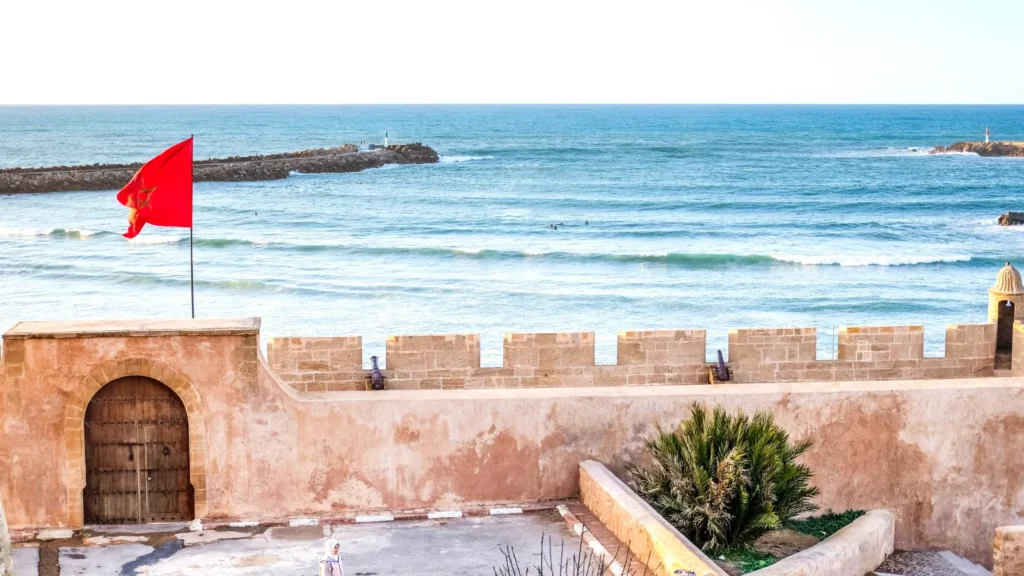
Rabat Morocco what to do is a question with an easy answer: spend a day or two on a handful of large historic sites, an old kasbah, a calm medina and a few good museums. Rabat is Morocco’s capital, but it feels quieter and more orderly than Casablanca or Marrakech, and most sights sit within a short taxi or tram ride of one another.
The city is also easy to reach by train, so it suits a day trip or a first stop on a route between Tangier, Fez and Casablanca. Rabat’s historic and modern districts are listed together as a UNESCO World Heritage property (see UNESCO’s page for Morocco).
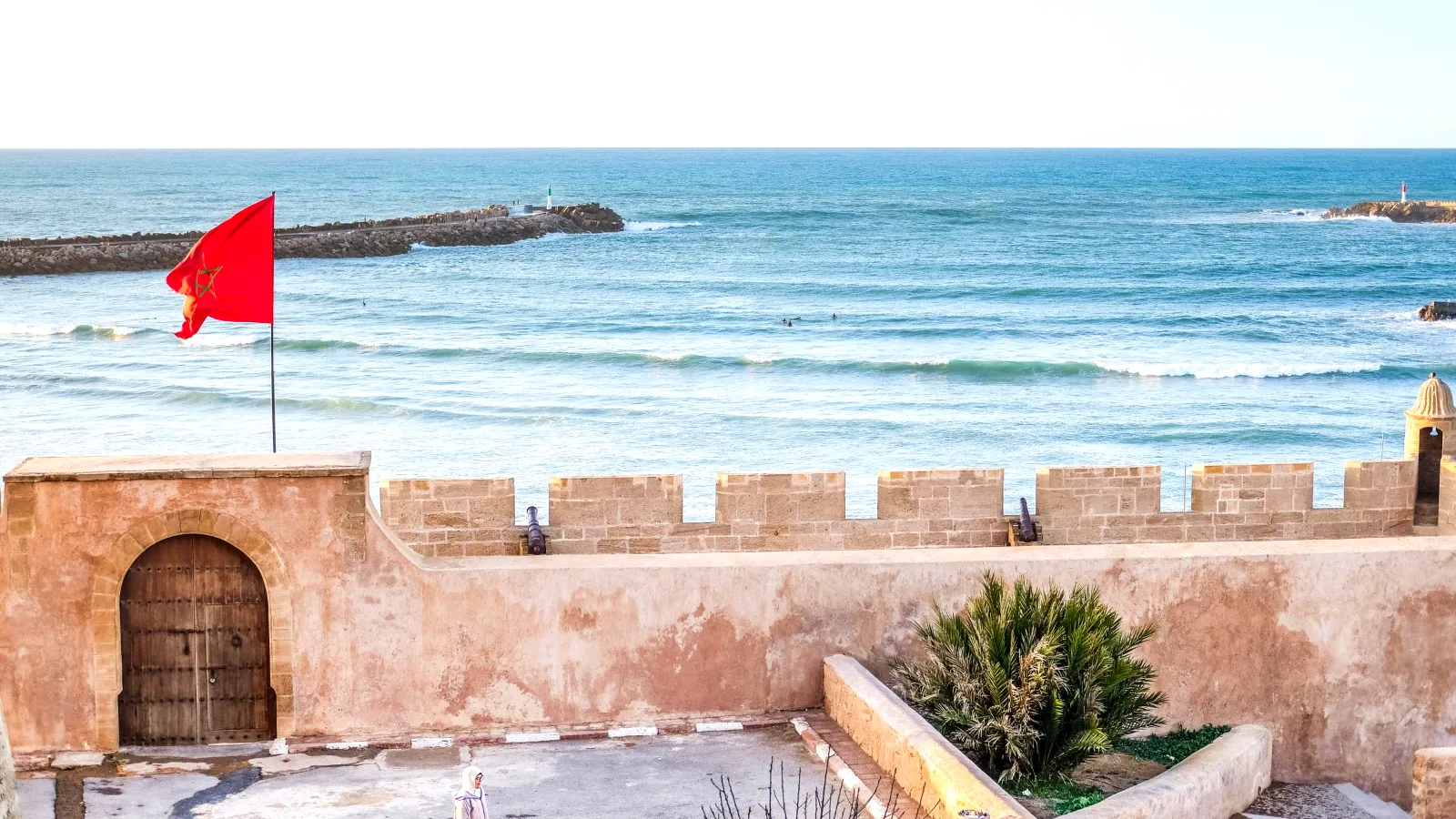
Table of Contents
Rabat Morocco what to do: the main sights
Hassan Tower and the Mausoleum of Mohammed V
Hassan Tower is the unfinished minaret of a mosque begun in the late twelfth century under the Almohad ruler Yaqub al-Mansur. It stands about 44 metres high; it was planned to be taller. Beside it is the Mausoleum of Mohammed V, built in the twentieth century and open to non-Muslim visitors, who can look down on the tomb from a gallery. Plan around thirty minutes to an hour for the whole site.
Kasbah of the Udayas
This twelfth-century fortified quarter overlooks the Bou Regreg estuary and the Atlantic. Its blue-and-white lanes lead to a viewing platform, a small craft museum and the Andalusian Garden. Rue des Consuls, the lane that climbs towards the kasbah, is lined with small shops selling leather goods, slippers and carpets.
Chellah
Chellah is a layered site: Roman remains from the city of Sala Colonia, a later Marinid necropolis and a quiet garden setting where storks often nest. It is slightly outside the centre, so combine it with a taxi to or from Hassan Tower. Wear comfortable shoes; paths are uneven.
The medina and the Bou Regreg
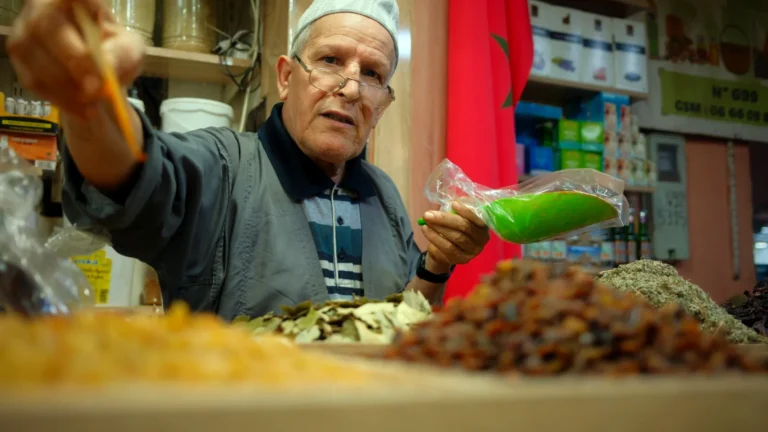
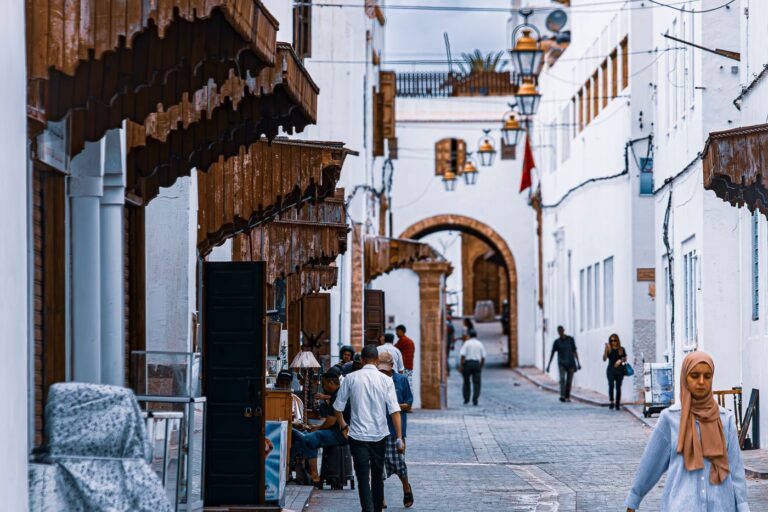
Rabat’s medina is mostly residential, with cafés and small shops along Rue Souika. It is less intense than Fez or Marrakech, which makes it a relaxed place to walk. In the evening, the riverside promenade along the Bou Regreg gives views over the water and the two sides of the city.
Museums and the modern city
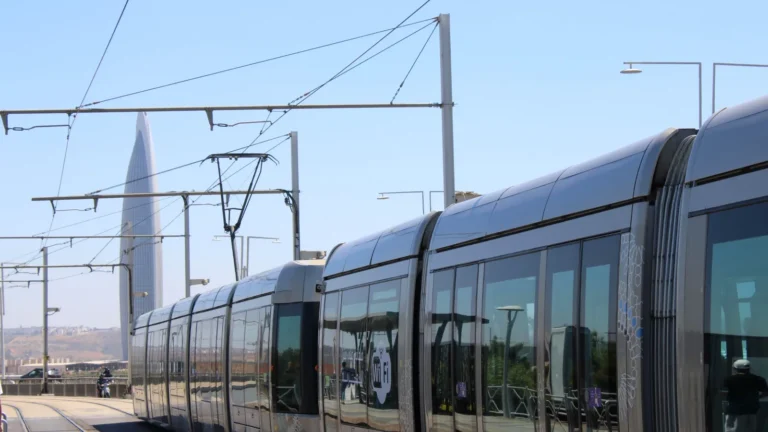
The Mohammed VI Museum of Modern and Contemporary Art opened in 2014 and focuses on Moroccan artists. The planned twentieth-century city centre, the Ville Nouvelle, has wide avenues, Art Deco buildings and the tram line. These areas are part of the same UNESCO listing as the historic monuments, so they are worth a short walk if you have the time.
| Sight | Best for | Typical time |
|---|---|---|
| Hassan Tower and Mausoleum | Landmarks and architecture | 30–60 minutes |
| Kasbah of the Udayas | Views, lanes, Andalusian Garden | 1–1.5 hours |
| Chellah | Ruins, storks and a quiet walk | 1 hour |
| Medina and Rue des Consuls | Shopping and everyday life | 1 hour |
| Mohammed VI Museum | Contemporary Moroccan art | 1–1.5 hours |
| Bou Regreg promenade | An evening walk | 30–60 minutes |
One day or two days in Rabat
With one day, start at Hassan Tower in the morning, continue to Chellah, take a break for lunch, then walk through the medina and the Kasbah of the Udayas in the afternoon. End with the river promenade at sunset. This is also a realistic plan if you arrive by train from Casablanca and leave in the evening; our Casablanca guide helps if you are combining both cities.
With two days, add the museum, the Ville Nouvelle and a slower start. Rabat does not need many hours at any one site, so a second day is mainly about pace.
Getting to Rabat and moving around
Rabat has frequent trains from Casablanca, Tangier, Fez and Marrakech. Trains arrive at Rabat Ville, which is close to the Ville Nouvelle, and at Rabat Agdal, which is a short taxi ride from the centre. See our Morocco ONCF train guide for how to book. Once you are in town, petit taxis and the tram cover most distances. Agree the fare or use the meter, and carry small change.
Practical tips
- Check opening hours and any entry fees close to your visit; some sites close one day a week.
- Dress modestly, especially at the mausoleum and around religious buildings.
- Morning is best for Chellah and Hassan Tower, when light is soft and sites are quieter.
- The Kasbah and medina lanes are uneven; wear shoes with grip.
- Rabat is calmer than many Moroccan cities, but keep valuables secure in crowded areas.
Common mistakes
- Expecting a chaotic medina like Fez; Rabat is calmer and more spread out.
- Skipping Chellah because it is not in the centre.
- Planning every sight on foot; distances between the main areas are longer than the map suggests.
- Visiting the museum or the Kasbah craft museum without checking the closing day.
Rabat questions answered
Is Rabat worth visiting?
Yes, if you like historic sites without heavy crowds and want a calmer capital city. It is less suited to travellers who want a lively old-city atmosphere for every hour of the day.
Can you visit Rabat in one day from Casablanca?
Yes. Trains connect the two cities, and a focused day covers Hassan Tower, Chellah and the Kasbah of the Udayas. Leave early and return in the evening.
Can non-Muslims enter the Mausoleum of Mohammed V?
Yes, non-Muslim visitors can visit the mausoleum and look at the tomb from the gallery. Dress modestly.
How long do you need in Rabat?
One long day is enough for the main sights. Two days is more relaxed and lets you add the museum and the modern city.
Choosing your Rabat plan
If time is limited, do Hassan Tower, Chellah and the Kasbah of the Udayas, then spend whatever is left in the medina. If you have a few days, treat Rabat as a calm stop between busier cities and see how it fits in our how many days in Morocco guide.