
If you are asking where is hot in January, the honest answer for Morocco is that nowhere is hot in the summer sense, but a few places are properly warm in the afternoon. The far south and the Atlantic coast lead with highs of 21 to 22°C, while Marrakech sits at 19°C and the desert towns of Ouarzazate and Errachidia reach only 16 to 17°C. The real surprise is the night: the same desert towns fall to around 2 to 3°C.
This guide ranks the warmest places in Morocco in January using long-term climate tables, adds rain, sunshine and sea temperatures so you can judge what the numbers feel like, and flags the cities to avoid if you are chasing sun. If you are comparing seasons for a wider trip, our best time to visit Morocco guide puts January in context.
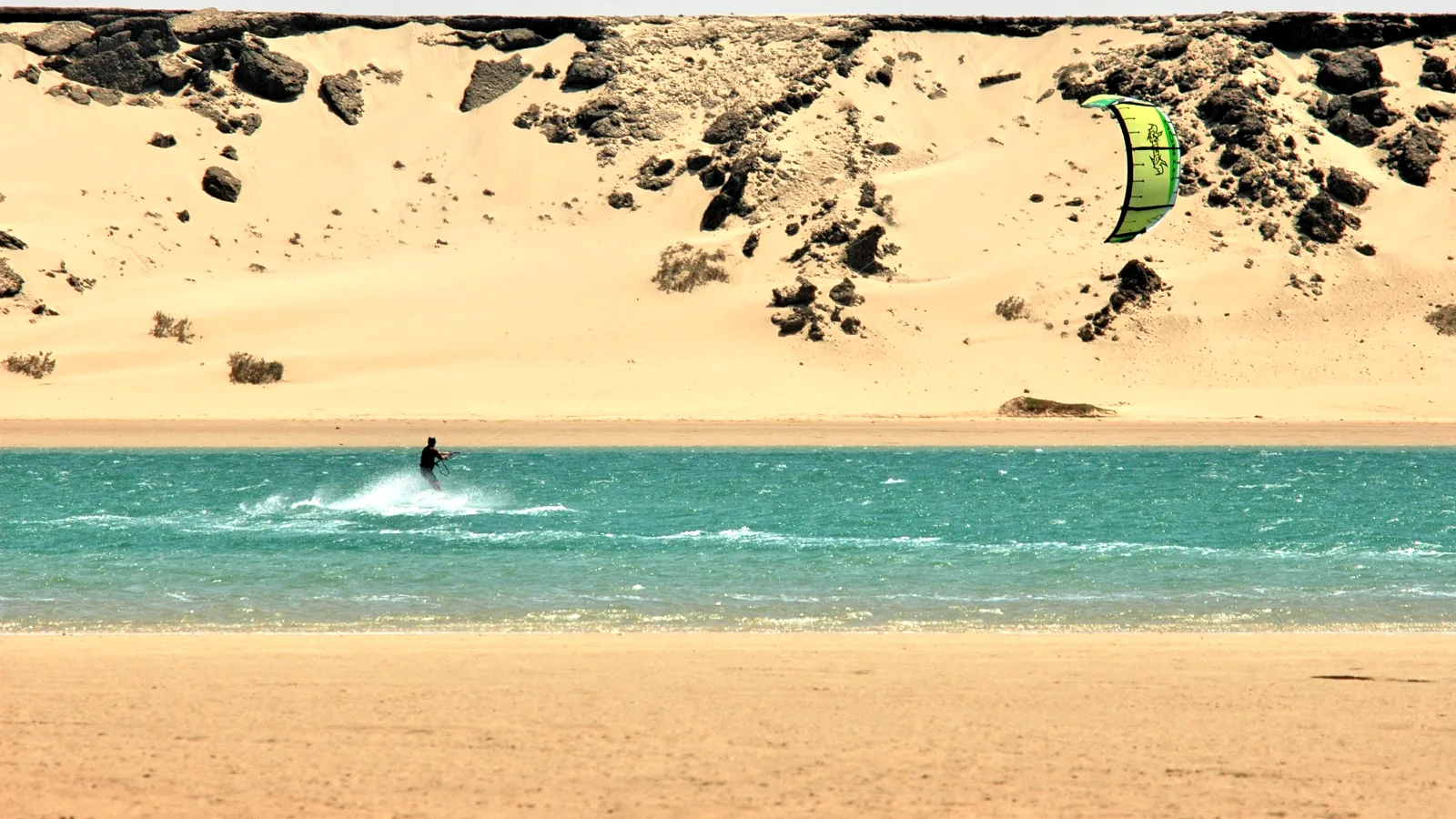
Table of Contents
Where is hot in January? The short answer
The warmest places in Morocco in January are Dakhla and Laayoune on the far southern coast, both averaging 22°C in the afternoon, followed by Agadir at 21°C. Marrakech reaches 19°C, Casablanca and Essaouira about 18 to 19°C, and Tangier, Ouarzazate, Fez and Errachidia between 16 and 17°C. Dakhla also has the mildest nights at 15°C, whereas Ouarzazate drops to 2°C. So the hottest place in Morocco in January is the Atlantic south, and the Sahara is sunny but cold after dark.
- Warmest by day: Dakhla and Laayoune (22°C), then Agadir (21°C)
- Mildest nights: Dakhla (15°C), Laayoune (12°C) and Essaouira (11°C)
- Sunniest of the main cities: Ouarzazate (8 hours a day), Agadir (7.5 hours)
- Wettest: Tangier (100 mm over 10 days) and Casablanca (65 mm over 8 days)
- Coldest nights: Ouarzazate (2°C), Errachidia (3°C) and Fez (4°C)
January weather by city: temperature, rain and sun
To see where is hot in January city by city, the table uses average figures: daytime high, night-time low, rainfall and sunshine. Read the low column carefully, because the gap between a warm afternoon and a cold night is the defining feature of Moroccan winter.
| City | Average high | Average low | Rain (rain days) | Sun hours per day |
|---|---|---|---|---|
| Dakhla | 22°C | 15°C | ≈0 mm (1 day) | — |
| Laayoune | 22°C | 12°C | ≈10 mm (2 days) | — |
| Agadir | 21°C | 8°C | 40 mm (5 days) | 7.5 |
| Marrakech | 19°C | 6°C | 30 mm (8 days) | 7 |
| Essaouira | 19°C | 11°C | 45 mm (7 days) | 6.5 |
| Casablanca | 18°C | 9°C | 65 mm (8 days) | 6 |
| Ouarzazate | 17°C | 2°C | 4.3 mm (2 days) | 8 |
| Tangier | 17°C | 8°C | 100 mm (10 days) | 5.5 |
| Fez | 16°C | 4°C | 60 mm (7 days) | 7 |
| Errachidia | 16°C | 3°C | 8 mm (2 days) | — |
Rain is the other factor. Tangier is the wettest city on the list, with about 100 mm falling on 10 days, while Ouarzazate gets only about 4 mm. The full national table is at Climates to Travel. Rainfall for Dakhla and Laayoune is rounded to the nearest 5 mm in the source tables.
How hot can it get in January? Records and hot-wind days
Averages hide the extremes, and January can surprise you in both directions. The source lists record or cited values for some of the inland cities, shown below. Hot desert winds occasionally push winter temperatures far above normal: the Agadir page notes that they can lift highs to around 30°C even in winter.
| City | Highest value cited | Lowest value cited |
|---|---|---|
| Marrakech | 30.1°C (2007) | −3°C |
| Ouarzazate | 26.5°C (2010) | −7°C (2005) |
| Fez | 25.4°C (2016) | — |
| Errachidia | 27°C (2015) | — |
Treat these as single-year readings, not forecasts. They show that a January afternoon above 25°C is possible inland, and that a January night can fall below freezing in Marrakech, Ouarzazate and Fez. The Fez page also records a low of −8°C in January 2005.
Sea temperature and swimming in January
The Atlantic is cool in January. The source tables put the sea at 16.5 to 19°C along the coast, which is cold enough that most visitors treat the beach as a place to walk rather than swim. The Dakhla lagoon is the mildest of the group.
| Coastal city | Average sea temperature |
|---|---|
| Agadir | 17.5°C |
| Casablanca | 17.6°C |
| Tangier | 16.5°C |
| Essaouira | 17.5°C |
| Dakhla | 19°C |
Agadir is the most practical option for a quick swim, and many hotels there have heated or sunny pools. The Agadir page describes the sea as never warm, with surf spots nearby, so expect a wetsuit if you plan to paddle for long. See the Agadir climate table for the month-by-month sea figures.
Best places to go in January for warm weather
Agadir: the easiest warm winter beach
Agadir is the most practical answer to where is hot in January for a classic holiday. Afternoons reach 21°C with about 7.5 hours of sunshine a day and little rain on most days, though evenings fall to 8°C so a jumper is useful. The promenade, the long beach and the cycle paths work well in cool sunshine. Our Agadir travel guide covers beaches, the souk and day trips.
Dakhla: warm nights and wind sports
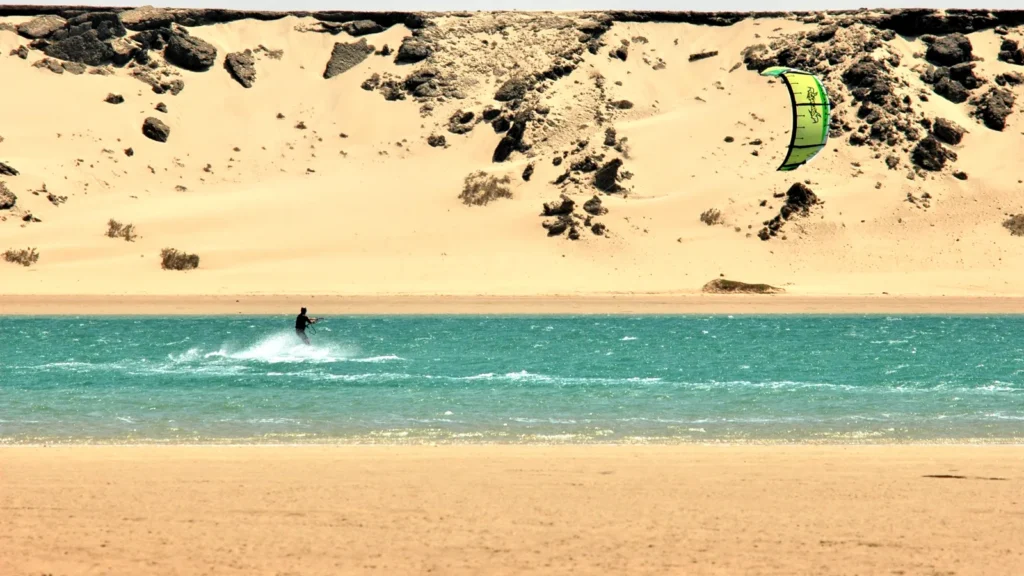
Dakhla sits on a long peninsula in the far south where ocean wind blows most of the year. Averages of 22°C by day and 15°C at night make it the mildest place in the country in January, and the sheltered lagoon is popular with kitesurfers. Early mist is common, so the sun can arrive late in the morning, and the rain is close to zero.
Marrakech: sunny days, cold evenings
Marrakech does not feel hot, yet 19°C afternoons in clear light are ideal for walking the medina. Expect about 7 hours of sun a day, and plan for evenings near 6°C in riads that may not be heated. For a month-specific breakdown, read our Marrakech January weather guide, and see how to spend New Year in Morocco if you are travelling early in the month.
Where it is not hot in January
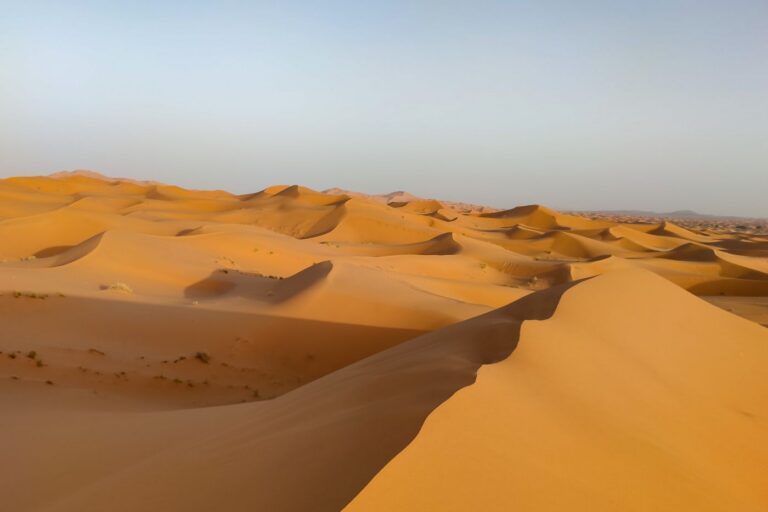
If you are asking where is hot in January and expect heat, Fez, Tangier and the Middle Atlas are the places to avoid. Fez averages 16°C by day and 4°C at night with about 60 mm of rain on seven days, and Tangier is the greyest city on the list with only 5.5 hours of sun daily. Ifrane in the mountains averages about 5°C, and snow falls on the high Atlas, which is great for photography but not for a beach day. The desert towns are a special case: Ouarzazate and Errachidia have bright, dry middays and nights close to freezing, so a Sahara camp in January needs proper layers.
January compared with December and February
Compared with December, the average high in Marrakech moves from 20°C to 19°C, in Ouarzazate from 18°C to 17°C, in Agadir from 22°C to 21°C and in Tangier from 18°C to 17°C. The sea at Agadir goes from 18.5°C to 17.5°C.
In practice, when you decide where is hot in January for your own trip, you are choosing between mild options, because January is the coldest month of the year for almost every city in Morocco, so if you can choose, February or March gives you slightly warmer afternoons and more sunshine. If your dates are fixed, the south coast and Agadir give the best chance of comfortable outdoor time, and Marrakech works if you accept cool evenings.
What to pack and how to plan for January
- A warm fleece or down jacket for evenings, especially in Marrakech, Fez and the desert
- Light layers and sunglasses for sunny midday walks in Agadir or Dakhla
- A waterproof jacket if you plan to visit Casablanca, Tangier or the north
- Closed shoes, as medina streets and mountain trails can be wet
- A swimsuit only if you are staying in Agadir or Dakhla, where the sea is cool but swimmable
Choose your base by how much warmth you want: Agadir or Dakhla for coast and sun, Marrakech for culture with cool nights, and the desert only with warm bedding. Our what to wear in Morocco guide has more detail on layering and modest dress, and the short drive or flight between Marrakech and Agadir makes a coast-plus-city combination easy.
January in Morocco: frequently asked questions
Where is the hottest place in Morocco in January?
Laayoune and Dakhla are the warmest, with average afternoon highs of about 22°C. Agadir follows at 21°C. Anywhere inland is cooler, especially at night.
Is it hot enough to swim in Morocco in January?
The Atlantic is cool, at roughly 16.5 to 19°C depending on the city. Dakhla is the mildest at 19°C and Agadir sits at 17.5°C, so swimming is possible but brief. Most visitors prefer a pool.
Is the Sahara hot in January?
Daytime highs at desert towns such as Errachidia are about 16°C, with nights near 3°C and a long-term cited low of −7°C at Ouarzazate. The sun is strong but the air is cold, so it suits trekking and calls for warm bedding.
Where is hot in January for a beach holiday in Morocco?
Agadir is the best all-round choice, with Dakhla ideal for wind sports. Both have mild winters, but neither is as hot as summer on the Mediterranean coast.
Does it rain a lot in Morocco in January?
The north and the Atlantic coast get most of the rain: Tangier has about 100 mm over 10 days and Casablanca about 65 mm over 8 days. Ouarzazate and Dakhla are almost dry.
Where is hot in other months
Planning around the weather? See our best time to visit Morocco month-by-month finder, or compare the same question for another month: