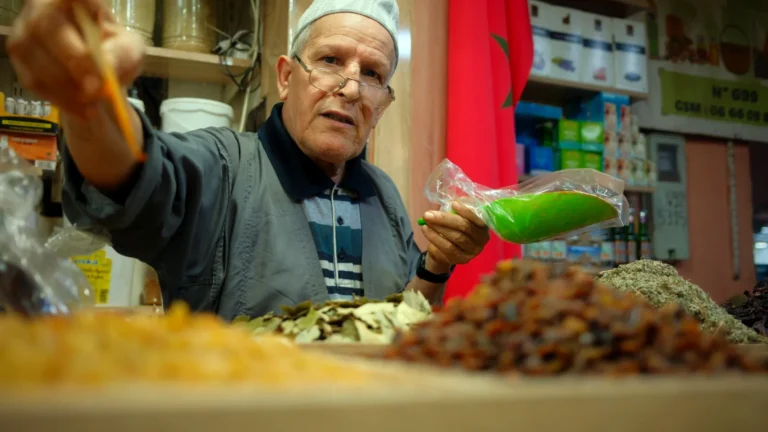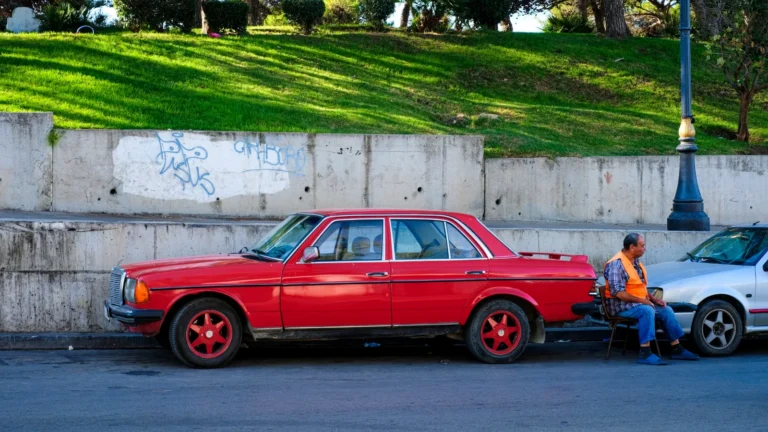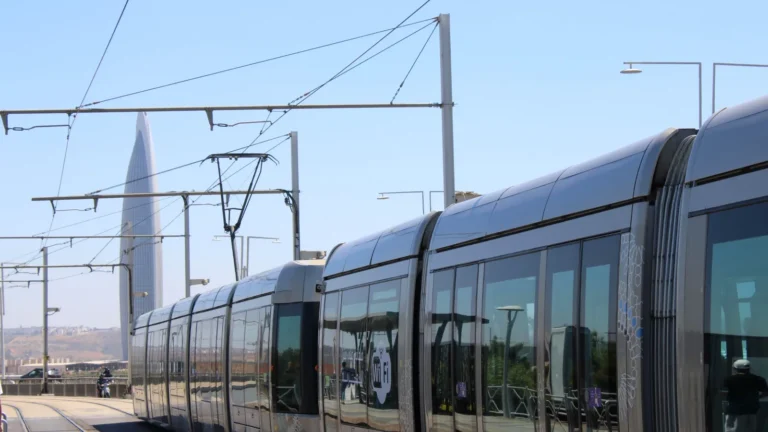

Casablanca or Marrakech Morocco is a common first-trip question, and the honest answer is that they are very different cities. Marrakech is the tourist favourite: the medina, the main square, the riads and the desert gateway. Casablanca is the modern, coastal, business city, best known for one landmark, the Hassan II Mosque. Most first-time visitors choose Marrakech, but Casablanca can make sense as an arrival or a short stop.
This guide compares them on character, sights, climate, cost of key sights and transport, using Culture Trip, climate data from Climates to Travel (Marrakesh) and Climates to Travel (Casablanca), Barceló for the mosque and Malika in Morocco for the train. A popular comparison page I found is probably AI-generated, with figures that contradict each other, so I did not use its prices. All prices below are as quoted by the sources and may have changed.
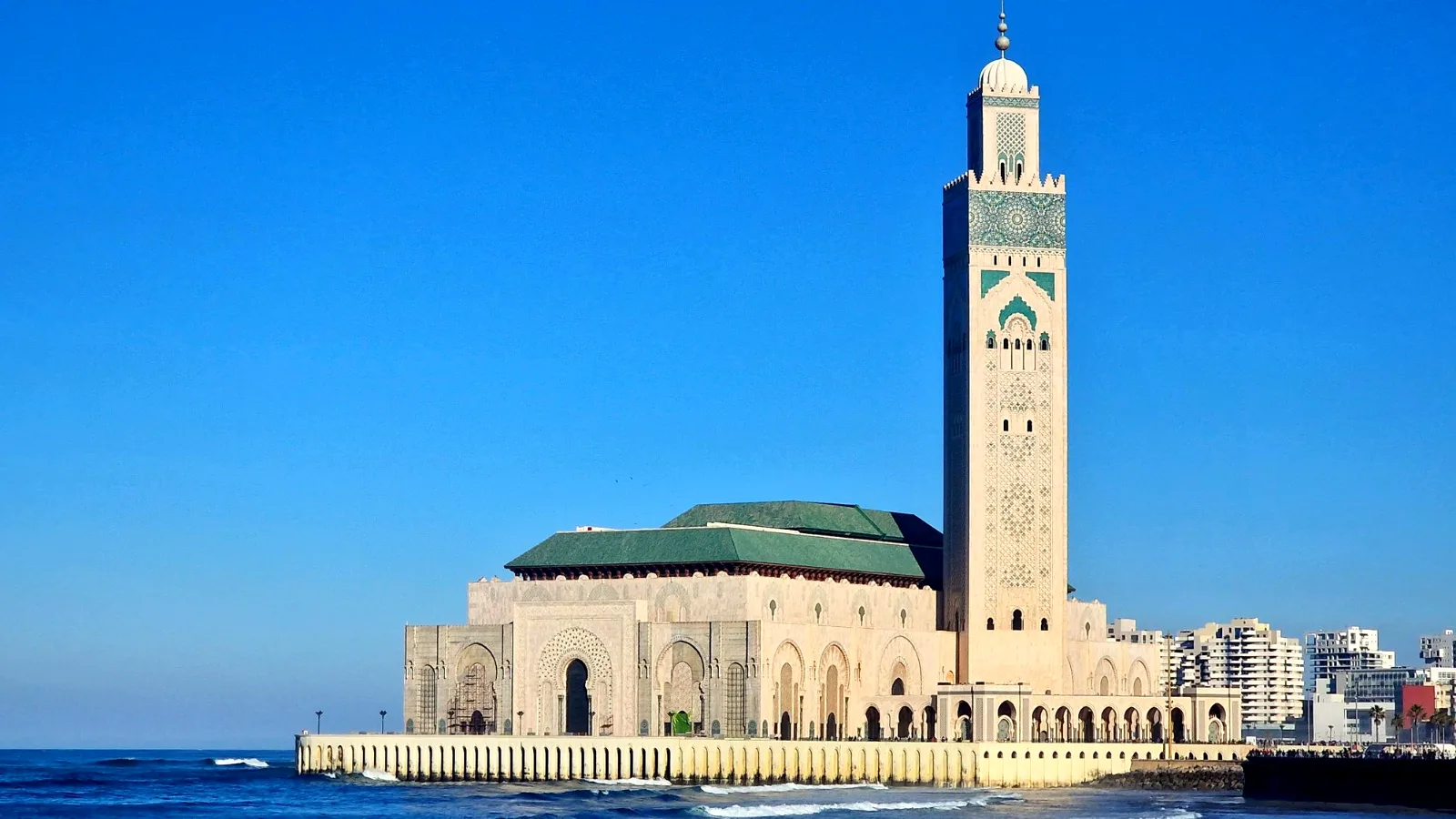
Table of Contents
Casablanca or Marrakech Morocco: the short answer
| Marrakech | Casablanca | |
|---|---|---|
| Character | Lively and busy with strong street culture, famed for its medina (Culture Trip) | Cooler and more coastal, with morning fog and sea breezes (Culture Trip) |
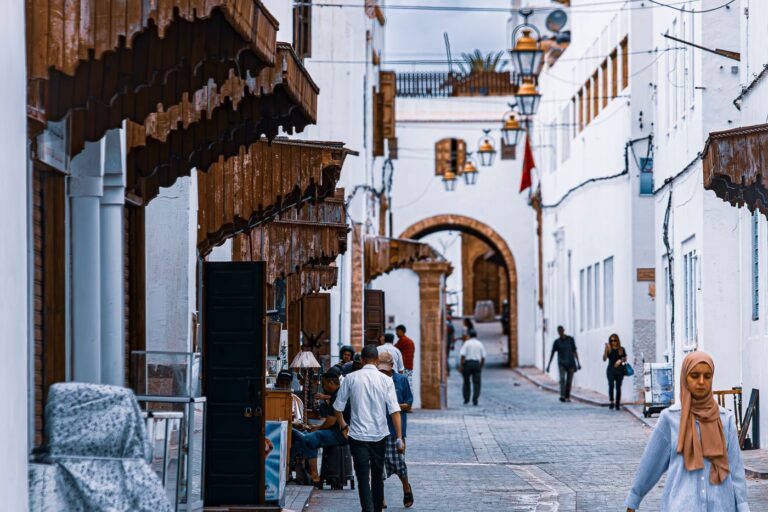
| Headline sights | Medina, souk, Jemaa el Fna and the new town | Hassan II Mosque, the Corniche, El Hank lighthouse, Rick’s Café |
| Best for | First-time visitors, riads, souks and desert trips | A modern city, the mosque, a coastal stopover or business |
| Shopping | Lower prices; one writer suggests paying under 40% of the asking price | Higher prices, but better quality overall, per the same writer |
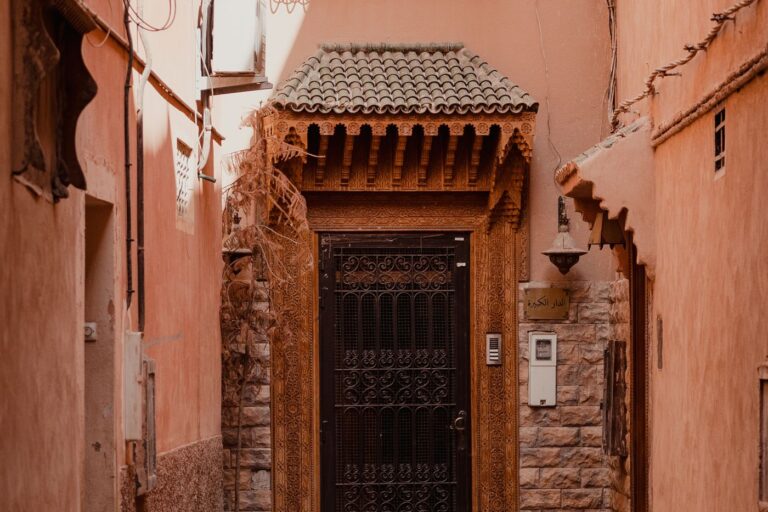
| Architecture | Red clay walls; riads built to stay cool | Hassan II Mosque, older areas beside modern development |
Culture Trip’s contrasts are one author’s impressions and some claims, such as the mosque being one of the biggest in the world, are unsupported there. For a longer Marrakech stay, our Marrakech attractions guide covers the sights, and for Casablanca our Casablanca guide does the same.
Climate: how the two cities differ
| Marrakech | Casablanca | |
|---|---|---|
| Annual mean temperature | 20.6°C | 18.55°C |
| Coolest month (January) | High 19.2°C, low 5.9°C | High 17.6°C, low 9°C |
| Hottest month | July: high 37.7°C | August: high 26.6°C, low 21°C |
| Annual rainfall | 250 mm in the text, 280 mm in the table | 425 mm over 53 rainy days |
| Rainiest months | Feb, Mar, Apr and Nov, 40 mm each | December 85 mm, January 65 mm |
| Sunshine | 3,130 hours a year | 2,925 hours a year |
| Sea temperature | Not applicable | About 17°C (Feb, Mar) to 23.5°C (August) |
The big contrast is summer. Marrakech has a July average high of 37.7°C, while Casablanca’s August high is 26.6°C, so the coast is far milder in summer. In January Marrakech is slightly warmer by day (a 19.2°C high against 17.6°C) but colder at night, with a low of 5.9°C against 9°C in Casablanca. The Marrakesh page contradicts itself on annual rainfall (250 mm in the text, 280 mm in the table), so treat it as roughly 250 to 280 mm. Our Casablanca to Sahara itinerary shows how Casablanca works as a starting point.
The Hassan II Mosque: Casablanca’s main reason to visit
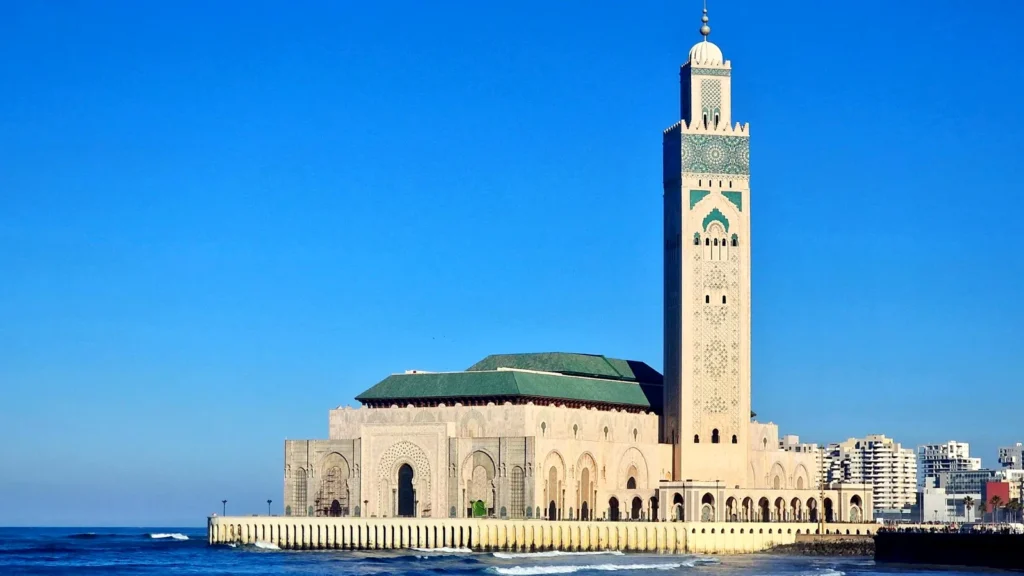
Barceló says construction began on 11 July 1986 and the mosque opened on 30 August 1993, with a minaret 200 metres high. It gives capacity as about 80,000 on the esplanade and 25,000 in the prayer hall. The page calls it the only mosque in Morocco open to non-Muslim visitors, but does not source that claim. Entry is by guided tour only.
| Detail | As quoted |
|---|---|
| Guided tour price (foreign adults) | 130 MAD; the page also mentions “over six” at 30 MAD, which is unclear |
| Museum entry | 30 MAD for foreign adults, 5 MAD for children and students |
| Tour times (16 Sept to 14 March) | Sat to Thu at 9:00, 10:00, 11:00, 12:00 and 15:00; Fri at 9:00, 10:00, 15:00 |
| Tour times (15 March to 15 Sept) | As above, plus 16:00 on all days |
| Dress | No shorts; shoulders covered; no eating or smoking inside |
The page gives no date for its prices and times, so confirm them at the mosque before you go. Its mention of a hammam is part of the original plan description, and it is unclear whether it is open to visitors.
Evenings, coast and atmosphere
Culture Trip describes the evenings differently. In Marrakech, food stalls and vendors fill the area around Jemaa el Fna after dark, with snake charmers and monkey handlers also present. In Casablanca, shops and clubs open along the Corniche in the evening, drawing a younger crowd on cooler nights. The same article lists Casablanca’s coastal sights as the El Hank lighthouse, the Corniche, Plage Lalla Meryem and Rick’s Café, a homage to the film Casablanca. Those are one writer’s impressions, and the film inspiration claim is not sourced there.
The climate data supports the coastal feel: the sea off Casablanca runs from about 17°C in February and March to about 23.5°C in August. That is cool for swimming in the cooler months and pleasant in late summer, and Marrakech has no coast at all. If a beach or sea breeze matters to you in summer, that is where Casablanca’s milder air helps.
Getting between Casablanca and Marrakech
Malika in Morocco describes the ONCF Al Atlas train from Casa Voyageurs to Marrakech Railway Station as taking 2.5 hours in a table and 2 hours 40 minutes in the text, with dozens of daily departures between about 5:50 am and 9 pm. Fares are given as 200 MAD second class and 300 MAD first class, although another place in the same article says around 220. Distance is given as under 250 km and around 240 km. Al Boraq does not serve this route.
Buses run too: about 14 daily CTM buses, from 100 MAD, taking about 2.5 to 3.75 hours depending on the Casablanca stop. Because the numbers conflict, check the operator’s timetable. Our ONCF train guide covers tickets and stations.
How to choose, and how to combine them
| If you want | Choose |
|---|---|
| Medina, souks, riads and a desert gateway | Marrakech |
| A coastal climate and a major landmark | Casablanca |
| A short stopover near the airport | Casablanca |
| Both | Casablanca first, then the train to Marrakech |
The table is my own summary of the sources, not a claim from them. If you have only a few days, Marrakech gives more of what visitors usually come for, while Casablanca fits as one or two nights on the way in or out. Our Marrakech medina guide shows what to expect from the medina.
Budgeting a stay in each city
I do not give a daily budget because the only comparison page with price tables was inconsistent, with its headline budget disagreeing with its own line items. The reliable numbers I do have are the Hassan II Mosque tour (130 MAD for foreign adults), the museum (30 MAD), the Casablanca to Marrakech train (200 MAD second class, 300 MAD first class) and the CTM bus (from 100 MAD). For everything else, check current prices for your dates.
As a general approach, price your accommodation first, since that is where the two cities differ most, then add entry fees and transport. Our Marrakech attractions guide lists what to see in Marrakech so you can count entry fees before you travel.
Casablanca or Marrakech Morocco: frequently asked questions
Is Casablanca or Marrakech better for a first trip?
Marrakech suits most first-timers because of its medina, riads and desert trips. Casablanca is better as a short stop for the mosque and the coast.
How far is Casablanca from Marrakech?
About 240 to 250 km, roughly 2.5 hours by train according to one source and 2 hours 40 minutes in the same article’s text.
Which is hotter, Casablanca or Marrakech?
Marrakech. July highs average 37.7°C there, against 26.6°C in Casablanca in August.
Can non-Muslims visit the Hassan II Mosque?
Yes, on guided tours, according to Barceló. The tour price is quoted at 130 MAD for foreign adults, so confirm current prices and times.
Is it worth visiting both?
If you have time, yes. They offer different experiences, and the train between them takes about 2.5 hours.