
Moulay Idriss Morocco is a small whitewashed town on two hills in the Zerhoun mountains, about 28 km from Meknes, and it holds the shrine of Idris I, who founded the Idrisid dynasty in the late eighth century. Many Moroccans regard it as one of the country’s most important holy places.
It is quiet on most days and easy to pair with the Roman ruins of Volubilis, only a few kilometres away. It is not an inscribed UNESCO World Heritage Site; the UNESCO page for Morocco shows Moulay Idriss Zerhoun on the tentative list only.
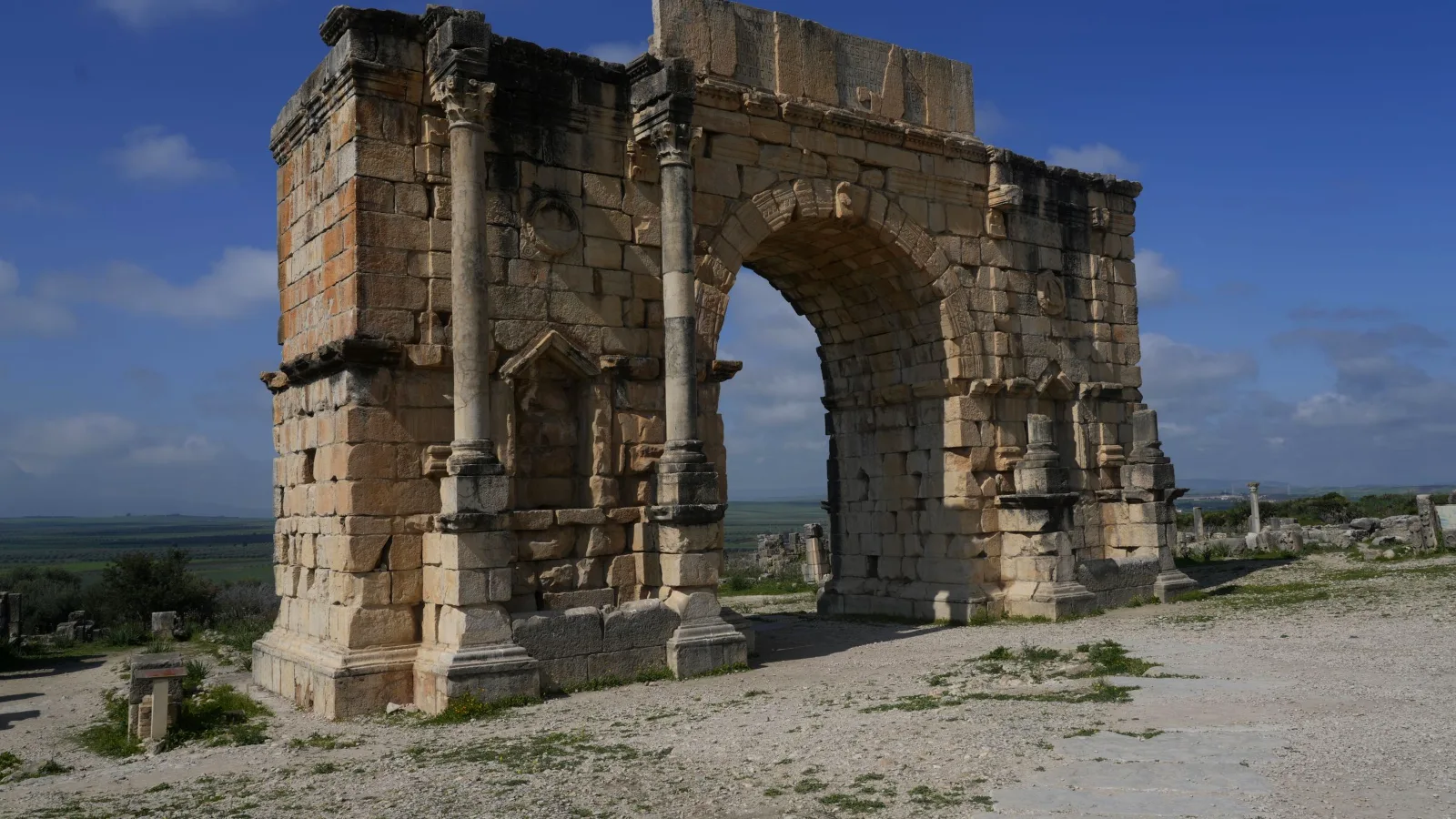
Table of Contents
Moulay Idriss Morocco: why the town matters
Idris I, a descendant of the Prophet, reached the region in the late eighth century, was accepted by local Amazigh tribes and settled near Volubilis. He died in 791. A shrine grew around his tomb, the town took his name, and the mausoleum was rebuilt in the early eighteenth century under Sultan Moulay Ismail. It is not the same place as the shrine of his son, Idris II, in the medina of Fez.
For visitors, the interest is the setting and the atmosphere rather than a list of monuments. The old town climbs two steep hills, the streets are narrow, and daily life carries on around a shrine that remains a pilgrimage destination.
Getting to Moulay Idriss from Meknes and Fez
| Starting point | Distance | How most people go |
|---|---|---|
| Meknes | About 28 km, roughly 30–40 minutes | Taxi or driver; Meknes is the nearest city with a train station |
| Fez | Roughly 1 to 1.5 hours by road | Private driver or a guided day trip combined with Meknes and Volubilis |
| Volubilis | A few kilometres | Short drive, often the first stop of the day |
No train goes to the town itself. Take ONCF to Meknes, then continue by road; our Morocco ONCF train guide explains the booking side. Vehicles usually stop at the lower edge of the old town, so expect to walk uphill from there.
What to see in the town
- The shrine from outside. The green-tiled roofs and the surrounding lanes are visible from the approach streets. The shrine itself is closed to non-Muslims.
- Sentissi Mosque. Built in 1939, it is often described as having the only cylindrical minaret in Morocco, covered in green tile.
- Hillside terraces. Higher points in the old town look back over the shrine and the Zerhoun hills. The climb involves steps, so wear shoes with grip.
- Everyday streets. Small shops and cafés line the main lanes. It is a lived-in town, not a staged attraction.
Combining Moulay Idriss and Volubilis with Meknes
The simplest plan is a loop from Meknes. Start at Volubilis early, when the light is softer and the ruins are cooler, then go to Moulay Idriss for lunch and the terraces, and return to Meknes late in the afternoon. Doing the same route from Fez works, but it becomes a long day and leaves little time for Meknes itself.
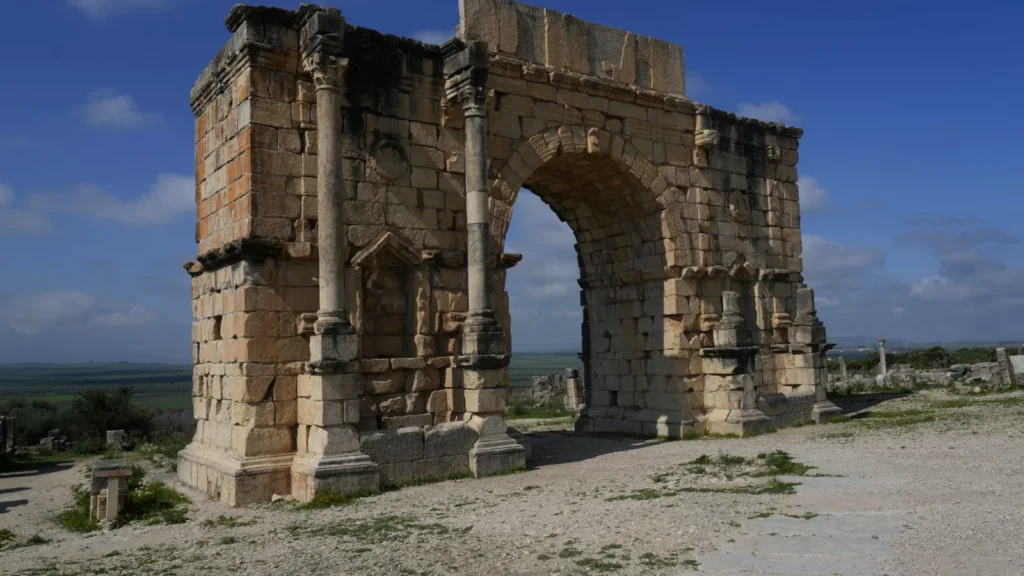
Moulay Idriss and Volubilis are only a few kilometres apart, yet they are very different places: one is a Roman-era site with little shade, the other a living religious town. If you only have time for one, choose Volubilis for archaeology and Moulay Idriss for atmosphere. Our Morocco famous landmarks guide helps you place both among other historic stops.
Visiting respectfully
- Dress modestly, with shoulders and knees covered.
- Do not try to enter the shrine or its closed courtyards if signs or local people direct you away.
- Ask before photographing people, and avoid pointing a camera at worshippers.
- Behave quietly near the shrine, especially around prayer times.
When to go and the August festival
Spring and autumn are comfortable for the hill climb. Summer afternoons are hot, and rain can make steep lanes slippery in winter. Every August a religious festival, a moussem, honours Idris I and brings large numbers of pilgrims. Dates vary from year to year, so check locally if you want to see it, and book transport and rooms early if you plan to stay.
Practical tips
- Carry water and small cash; do not expect cards everywhere.
- Agree on the length of the stop with your driver in advance.
- Visitors with limited mobility may find the lanes demanding; the lower streets are easier.
- A local guide is optional, but useful if you want the history explained.
- Plan the return before dark if you are relying on taxis.
If you are building a longer route, see how many days to spend in Morocco, and our Fez to Marrakech desert tour for a continuation south.
Moulay Idriss questions answered
Is Moulay Idriss worth visiting?
Yes, if you are already near Meknes or Volubilis and want a quieter town with strong local character. If time in Fez is short, it is a lower priority than the medina itself.
Can non-Muslims visit Moulay Idriss?
Non-Muslims can walk through the town and enjoy the views, but the shrine’s interior is closed to them.
Is Moulay Idriss a UNESCO World Heritage site?
Not yet. UNESCO lists Moulay Idriss Zerhoun on Morocco’s tentative list, which is only a list of places the country may nominate in future.
When is the Moulay Idriss festival?
The annual moussem takes place in August. The exact dates change, so confirm locally before planning around it.
Is the detour worth it?
For most travellers, Moulay Idriss works best as a half-day stop paired with Volubilis, not as a stand-alone trip. Go if you like hill towns and want a view of religious life in Morocco; skip it if your itinerary is already stretched.