
UNESCO World Heritage Sites Morocco travellers can visit number nine on the official list, and all nine are cultural properties: medinas, a fortified earthen village, a Roman city, a Portuguese-built port and the modern capital. None is a national park, and several places people often assume are listed, such as Chefchaouen, Casablanca or the Sahara dunes, are not among them.
That matters for planning. The nine sites are spread from the northern coast to the Atlas foothills, so the useful question is not how to see all of them but which cluster fits the route you already have in mind.
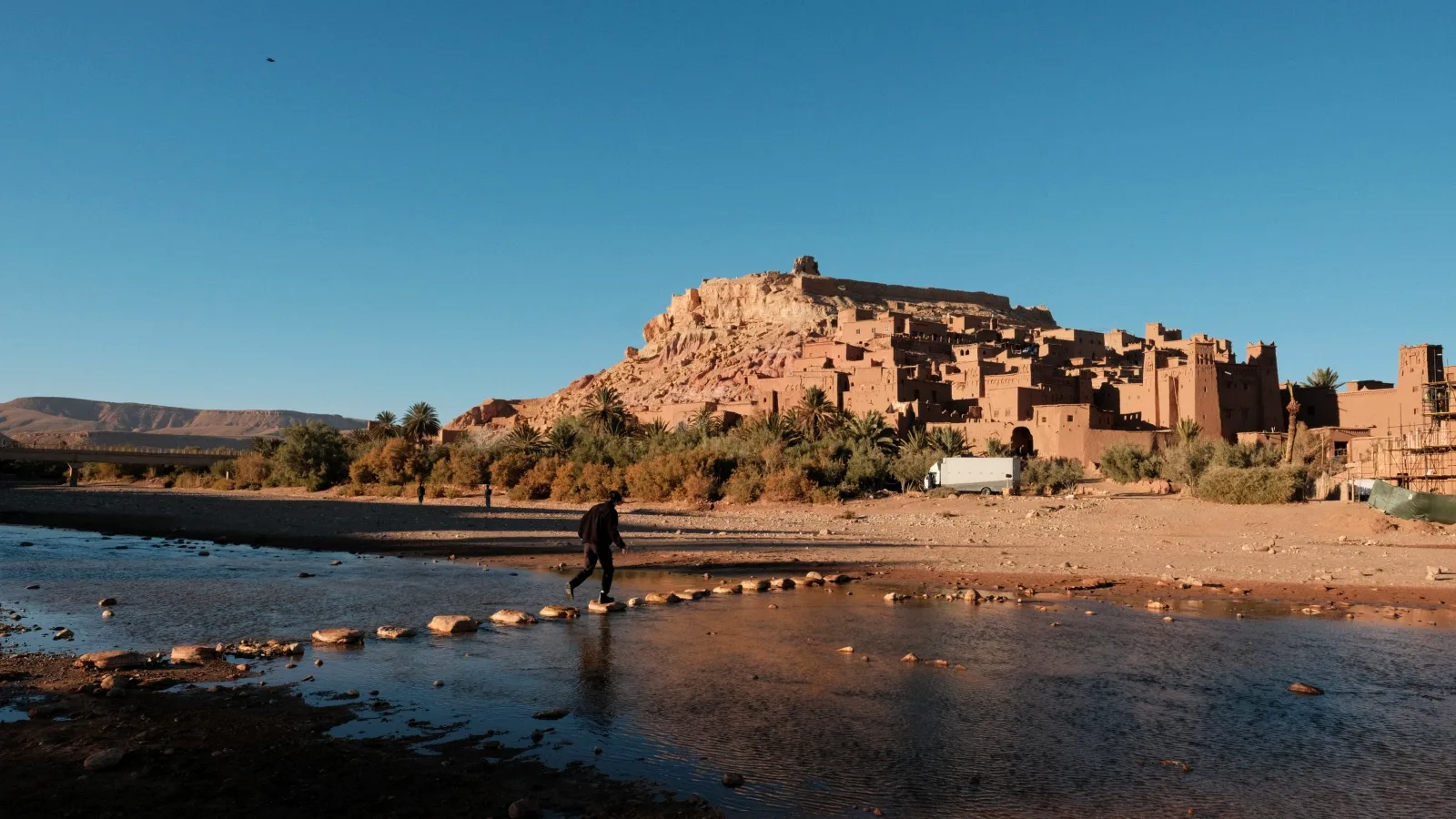
Table of Contents
UNESCO World Heritage Sites Morocco: the full list
The UNESCO page for Morocco lists nine inscribed properties. The table follows the order in which they were added and shows how most visitors reach each one. These are the World Heritage sites in Morocco proper; the country also keeps a separate tentative list of places it may nominate later.
| Site | Where | Inscribed | Reaching it |
|---|---|---|---|
| Medina of Fez | Fez | 1981 | Train to Fez, then a short taxi or walk to the medina gates |
| Medina of Marrakesh | Marrakech | 1985 | Train or flight; taxis stop at the edge of the medina |
| Ksar of Ait-Ben-Haddou | Near Ouarzazate | 1987 | Road only; a long drive over the High Atlas from Marrakech |
| Historic City of Meknes | Meknes | 1996 | Train from Fez or Rabat |
| Archaeological Site of Volubilis | Near Meknes | 1997 | Short drive or taxi from Meknes |
| Medina of Tétouan | Tétouan | 1997 | Road from Tangier or Chefchaouen |
| Medina of Essaouira | Essaouira | 2001 | Road from Marrakech or Agadir |
| Portuguese City of Mazagan | El Jadida | 2004 | Road from Casablanca |
| Rabat, Modern Capital and Historic City | Rabat | 2012 | Train from Casablanca, Tangier or Fez |
Names and dates follow UNESCO. Opening hours and ticket rules at individual monuments change, so check them shortly before you go rather than relying on an older guidebook.
Fez, Meknes and Volubilis: the northern imperial route
Medina of Fez
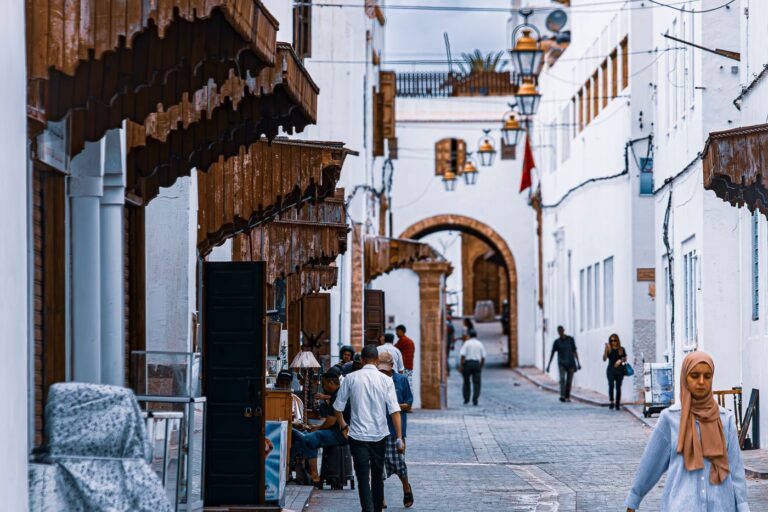
The medina of Fez dates back to the ninth century and is still a working neighbourhood rather than a museum. Tanneries, metalwork lanes, madrasas and family workshops sit side by side, and most lanes are too narrow for cars, so goods still move by hand cart and mule. Allow two nights if you want more than the best-known corners, and expect to get lost at least once.
Many travellers continue from Fez towards the desert. Our Fez to Marrakech desert tour guide shows how that route is usually built.
Meknes
Meknes became an imperial capital under Sultan Moulay Ismail in the late seventeenth century, which explains the monumental gates, granaries and walls. It is calmer than Fez and easy to reach by train, so it works well as a half-day stop between Rabat and Fez.
Volubilis
Volubilis is a Roman-era city that once stood near the edge of the empire. Mosaics remain on site, but shade is scarce, so go early in summer and carry water. Most visitors combine it with Meknes. Moulay Idriss Zerhoun sits on the same road, yet UNESCO lists it only on Morocco’s tentative list, not among the nine inscribed properties.
Marrakech and Ait Ben Haddou in the south
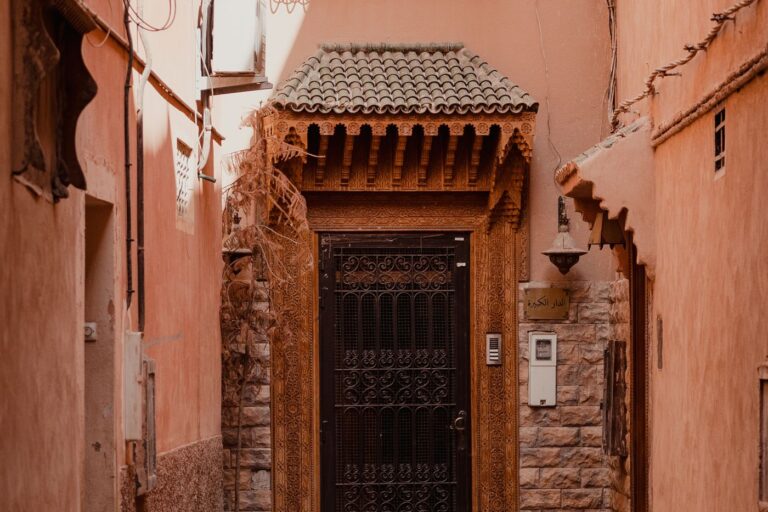
The Medina of Marrakesh was founded in the eleventh century under the Almoravids, and the ramparts, the Koutoubia minaret and the Jemaa el-Fna square still shape the city. Plan the medina by area instead of working through a checklist; our Marrakech medina guide breaks it into manageable stops.
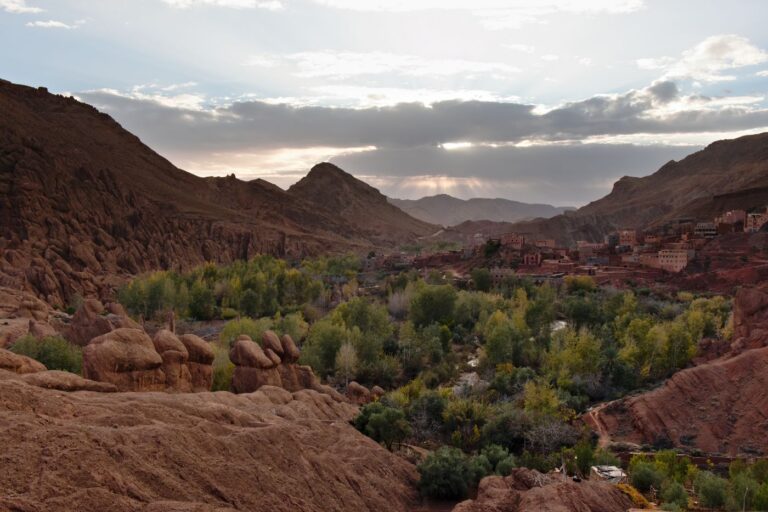
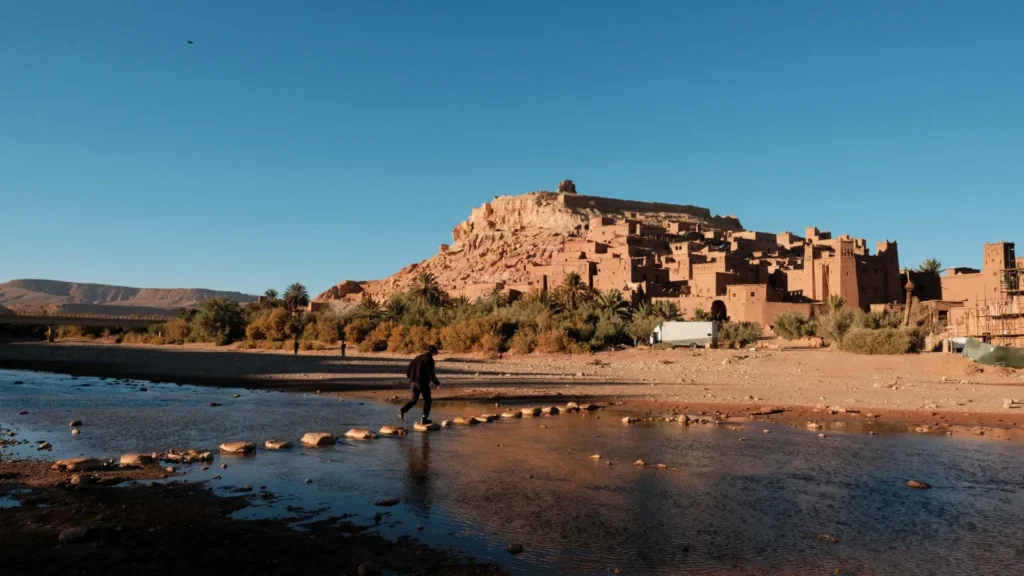
Ait Ben Haddou is a ksar, a cluster of fortified earthen houses, built along the old caravan route between the Sahara and Marrakech. The drive from Marrakech crosses the High Atlas by the Tizi n’Tichka pass and takes roughly four hours each way, depending on traffic and road works. A day trip is possible but tiring; sleeping in the Ouarzazate area is more comfortable. Winter weather can slow mountain roads, so check conditions before a cold-season departure. The walk up through the village involves steps and uneven ground, which may be hard for visitors with limited mobility.
Among the UNESCO sites near Marrakech, Ait Ben Haddou and Essaouira are the usual additions. Both need a road journey, and neither is a quick errand.
Essaouira, El Jadida, Rabat and Tétouan
Essaouira
The medina of Essaouira, formerly Mogador, was laid out in the late eighteenth century as a fortified port with a more regular street plan than the older imperial medinas. Essaouira is reached by road rather than by train, usually in about two and a half to three hours from Marrakech. The Atlantic wind is part of the experience, so bring a layer even on sunny days.
El Jadida
The Portuguese City of Mazagan is a sixteenth-century fortified town known for its ramparts and underground cistern. It suits a half-day stop from Casablanca, roughly an hour and a half by road. Confirm current access to the cistern before you go.
Rabat
Rabat’s listing is unusual because it covers a whole capital rather than a single monument. It brings together Almohad-era remains, the Kasbah of the Udayas, the Chellah site and the planned twentieth-century city centre. Rabat is also the easiest of the nine to reach, with frequent trains from Casablanca, Tangier and Fez; see our Morocco ONCF train guide for how booking works.
Tétouan
The medina of Tétouan was rebuilt largely by Andalusian refugees from the late fifteenth century, which shows in its whitewashed houses and craft traditions. It lies about an hour from Tangier by road and pairs easily with Chefchaouen, which is not a UNESCO site. If you are starting in the north, our guide to things to do in Tangier helps with the first day.
How to combine the sites into a trip
| Route | Sites | Suggested time | Notes |
|---|---|---|---|
| Imperial cities | Rabat, Meknes, Volubilis, Fez | 5–6 days | Trains cover Rabat, Meknes and Fez; arrange a driver or taxi for Volubilis |
| South | Marrakech, Ait Ben Haddou | 3–4 days | Overnight near Ouarzazate rather than a rushed day trip |
| Atlantic coast | El Jadida, Essaouira | 2–3 days | By road only; pair with Casablanca or Marrakech |
| North | Tétouan | 2 days | Start from Tangier; Chefchaouen is a pleasant add-on but not listed |
With ten days, the imperial route plus Marrakech and Ait Ben Haddou covers six of the nine without constant driving. Our guide to how many days to spend in Morocco compares 7, 10 and 12-day plans. Train times change, so confirm them close to travel.
Practical tips for visiting heritage medinas and ruins
- A World Heritage listing covers an area, not a single ticket office. Walking through a medina is free, but individual monuments, museums and ruins may charge entry.
- Dress modestly, especially near religious buildings. Most working mosques are closed to non-Muslims.
- Ask your riad or hotel about licensed guides, and agree the duration and price before you start.
- Visit open sites such as Volubilis and Ait Ben Haddou early or late in summer; heat and shade are real limits.
- Ask before photographing people, and keep valuables out of sight in crowded lanes.
- Wear shoes with grip. Medina paving and kasbah steps are uneven and can be slippery after rain.
Common planning mistakes
- Trying to see all nine in one week. Tétouan and Ait Ben Haddou are at opposite ends of the country.
- Assuming Chefchaouen, Casablanca or the Sahara camps are on the list. They are not among the nine inscribed properties.
- Treating Ait Ben Haddou as a stop on the way somewhere else without allowing for mountain driving time.
- Booking a long road day straight after an early flight or a late arrival.
UNESCO sites in Morocco: frequently asked questions
How many UNESCO sites are in Morocco?
UNESCO’s page for Morocco lists nine inscribed properties, all of them cultural. The separate tentative list is only an inventory of places Morocco may nominate in future.
Which sites are easiest to reach by train?
Rabat, Meknes, Fez and Marrakech are all on the ONCF network. Volubilis, Ait Ben Haddou, Essaouira, El Jadida and Tétouan need a road leg by car, taxi, bus or organised transfer.
Is Moulay Idriss a UNESCO World Heritage site?
Not yet. UNESCO shows Moulay Idriss Zerhoun on Morocco’s tentative list, which is not the same as inscription.
Are there natural UNESCO sites in Morocco?
No. All nine inscribed properties are cultural. Some natural areas appear on the tentative list.
Choosing which sites to see first
If time is short, pick one cluster and do it properly: Fez, Meknes and Volubilis from a single base, or Marrakech with Ait Ben Haddou. Add the coast or the north on a longer trip, when the road time no longer eats into the sightseeing. Whichever you choose, book transport and a few nights early, and confirm monument hours before the day you plan to visit.