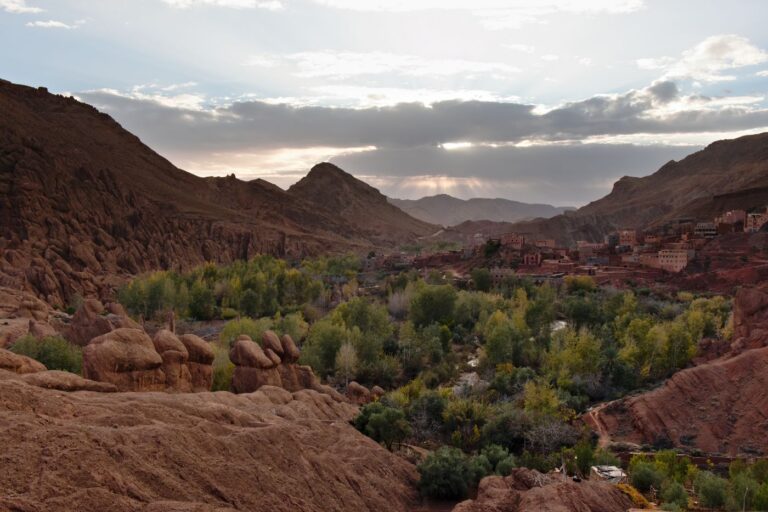

The Morocco valley of roses is a ribbon of green along the Dades valley, around the town of Kelaat M’Gouna, where damask roses are grown as hedges between the fields and picked by hand before sunrise. For a few weeks each spring the air smells of rose, the town holds a festival, and the road between the Atlas and the desert becomes one of the prettiest drives in the south.
Timing is everything: visit outside the bloom and you will see a normal oasis valley, visit in the right weeks and you will see something very different. This guide explains when the roses bloom, what the rose festival involves, how the harvest works, how far it is from the main cities and what to buy. Facts come from Slow Morocco and Morocco Tours Experts, and the second is a tour operator blog, so its practical claims are flagged. It fits naturally into a southern route such as our Casablanca to Sahara itinerary.
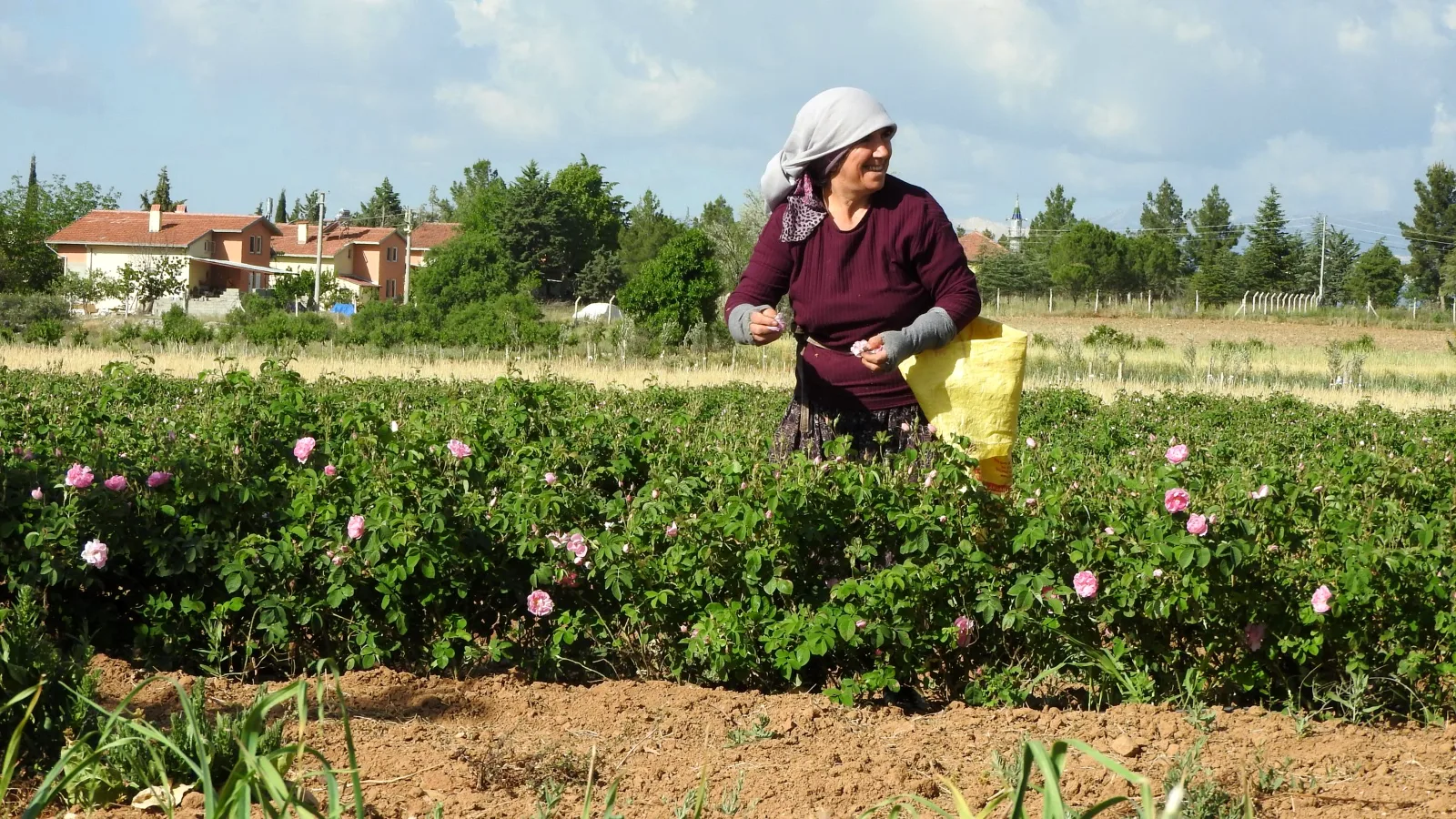
Table of Contents
Morocco valley of roses: the quick facts
| Question | Answer from the sources |
|---|---|
| Where is it? | The Dades valley around Kelaat M’Gouna, where the valley narrows into the Dades Gorge |
| Which rose? | Rosa damascena, the damask rose |
| Best month to visit | May, with the bloom lasting about 25 to 45 days between March and May |
| Harvest period | Roughly mid-April to mid-May depending on weather |
| Rose festival | Three days in the first or second week of May; 7 to 10 May in 2026 (61st edition) |
| Entry | The valley itself is free to visit |
| From Ouarzazate | About 90 km, roughly 1.5 hours (tour operator figure) |
| From Marrakech | About 290 km, roughly 5 to 6 hours over the Tizi n’Tichka pass (tour operator figure) |
When to visit the valley of roses
May is the headline month for the Morocco valley of roses. Slow Morocco lists it as the best time and says the bloom lasts about 25 to 45 days between March and May, with a cold snap capable of damaging it. Morocco Tours Experts puts the harvest from mid-April to mid-May. Both agree that the exact window moves with the weather, so a trip planned months ahead is a gamble, and a trip planned a few weeks ahead is much safer. If you are choosing your travel month more broadly, our 10-day Morocco itinerary shows how the south fits into a longer trip.
Outside the bloom the Morocco valley of roses is still worth the drive for its scenery and the nearby gorges, but you will not see the rose hedges in flower. Slow Morocco notes that distilleries can be visited outside the festival season, so you can still see how rose water is made.
How the roses are grown and harvested
The roses are not grown in fields the way a tourist might imagine. According to figures quoted by Slow Morocco, about 950 hectares are planted, mostly as hedges along stone walls and field borders, worked by roughly 6,000 farmers across seven rural communes. Drip irrigation has spread widely since 2008, which matters in a dry valley.
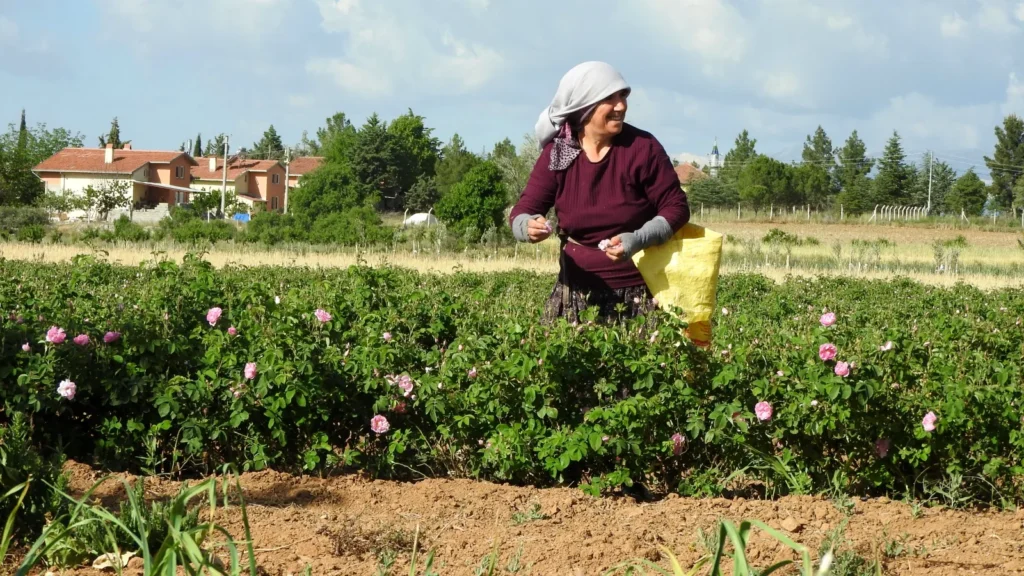
Picking is done by hand, mostly by local women, starting before dawn while it is still cool. Both sources explain the reason: heat reduces the oils in the petals, so the flowers are collected early and bagged before the sun is high. Slow Morocco gives a farm-gate price of around 20 dirhams per kilo and a harvest of about 3,200 tonnes in 2022, with a forecast of 5,000 tonnes for 2026. These are agency figures relayed by one site, so treat them as indicative.
From rose to rose water: what happens next
Most of the harvest is distilled. The sources agree that rose water is made by distillation, and that the essential oil is far more expensive to produce: Slow Morocco says one litre of oil needs roughly 3,500 to 4,000 kg of flowers, and the tour operator blog gives a similar figure of about four tonnes, which is unsourced. Rose water and dried buds are the products visitors can actually afford, and the same operator notes that cooperatives also make soaps, creams, bath salts and ghassoul clay masks.
The Kelaat M’Gouna rose festival
The festival is the busiest weekend of the year. Morocco Tours Experts describes a three-day event, usually in the first or second week of May, with dates set by how the harvest is going and announced only a few weeks in advance. Slow Morocco lists the 2026 edition as 7 to 10 May, the 61st, with more than a hundred stands, a procession and the election of a rose queen. Expect parades, music and dance in the town square, including the Berber group dance ahidus.
- Book accommodation as soon as the dates are announced, because small towns fill quickly
- Arrive early for the procession and bring sun protection
- Check the official dates before you travel, as they depend on the harvest
- If crowds are not your thing, visit a week earlier or later and see the harvest instead
How to get there and plan the day
The Morocco valley of roses sits on the route between Ouarzazate and the Dades and Todra gorges, so it works best as part of a loop rather than a single destination. The tour operator blog gives about 90 km and 1.5 hours from Ouarzazate and about 290 km and 5 to 6 hours from Marrakech over the Tizi n’Tichka pass. Our Fes to Marrakech desert tour guide shows how this valley fits into a classic route across the Atlas and the desert, and our Morocco road trip guide covers driving conditions.
Nearby highlights named in the sources include the Dades Gorge, the Monkey Fingers rock formation, the Todra Gorge and the Jebel Saghro nomad routes. If you want to walk, our Morocco hiking tours guide covers the region.
What to buy and how to visit respectfully
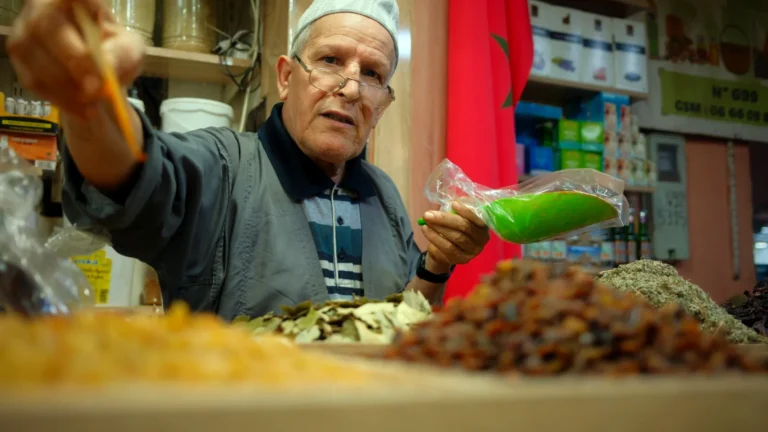
- Rose water and dried rose buds are the classic purchases, sold by local processors and cooperatives
- Buy from women’s cooperatives where possible, which is the tour operator’s advice and supports the pickers
- Ask permission before photographing people, especially during the harvest
- Dress modestly in villages, covering shoulders and knees
- Wear sturdy shoes for rocky trails and bring sun protection, because the altitude makes the sun strong
Morocco valley of roses: frequently asked questions
When is the best time to visit the valley of roses in Morocco?
May is the best month, with the festival in the first or second week and the harvest from mid-April to mid-May. Dates vary with the weather, so check close to your travel date.
When is the Kelaat M’Gouna rose festival?
It usually takes place over three days in the first or second week of May. The 2026 edition ran from 7 to 10 May, and dates are announced only a few weeks ahead.
How far is the valley of roses from Marrakech?
About 290 km, roughly 5 to 6 hours by road over the Tizi n’Tichka pass, according to a tour operator. It is usually visited as part of a two- or three-day trip rather than a day return.
Is it free to enter the valley of roses?
Yes. Slow Morocco states that entry to the valley is free. Distilleries and cooperatives set their own rules, and some can be visited outside the festival season.
What should I buy in the valley of roses?
Rose water and dried rose buds are the best-known products. Cooperatives also sell soaps, creams and clay masks, and buying from a women’s cooperative supports the pickers.
Related guides
- Three Valleys Morocco: Which Valleys and What to Expect
- Talassemtane National Park Morocco: Hikes and Facts
- Ouzoud Morocco: Waterfalls Day Trip Guide
- Skiing Atlas Mountains Morocco: Resorts, Season, Costs
- Desert Camping in Morocco: Chebbi vs Chigaga Guide
- Camel Rides in Marrakech Morocco: Prices and Options