
Berber village Morocco visits can be rewarding or awkward depending on how they are set up. The best ones are walks, meals or overnight stays arranged with a local family or a community guide; the worst feel like a quick photo stop at someone’s front door.
Many people in these communities use the word Amazigh for themselves, while Berber is the older outside term that still appears on signs and in search results. This guide uses both, explains where to look, and covers the practical etiquette that makes a visit better for everyone.
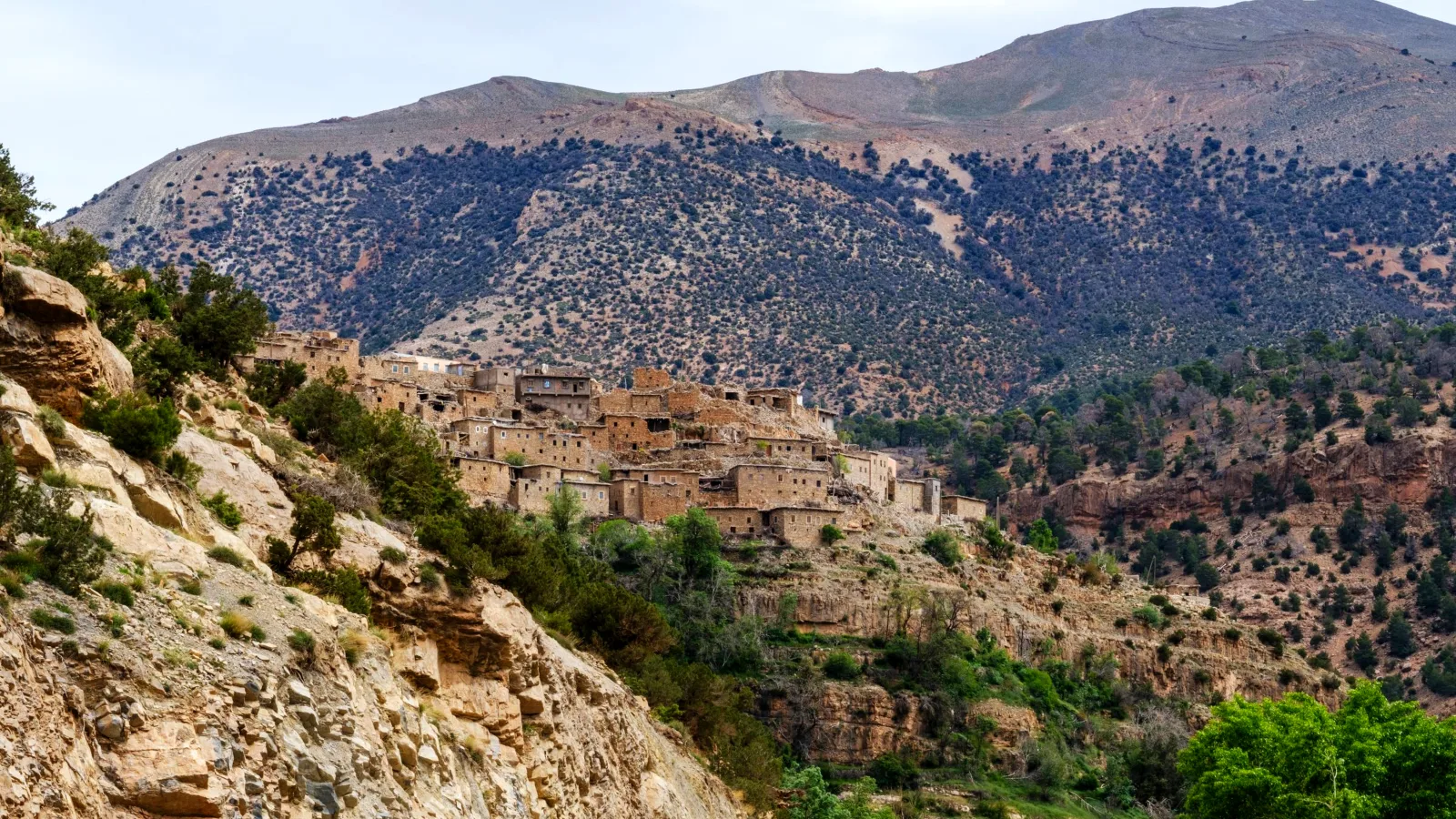
Table of Contents
Berber village Morocco: where to find them
| Area | What it offers | Typical way to visit |
|---|---|---|
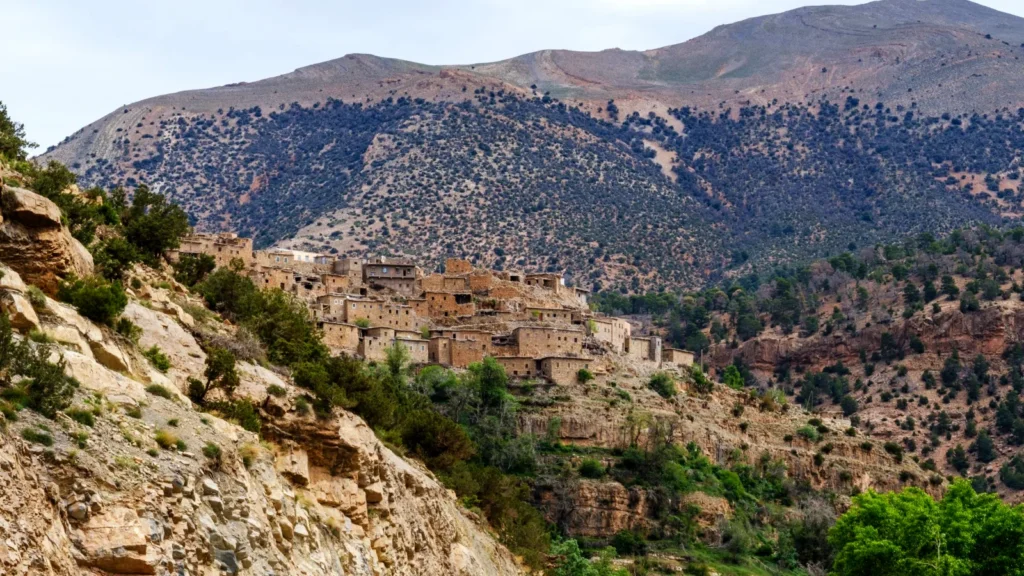
| Imlil and the Toubkal valleys (High Atlas) | Stone-built villages such as Aroumd and higher settlements on trekking routes | Guided walks, with a night in a village guesthouse (gîte) |
| Ourika Valley | Villages and walnut groves, with waterfalls near Setti Fadma | Day trip from Marrakech, with a local guide for walks |
| Ouirgane and the lower valleys | Greener landscapes and a warmer climate | Short drives or stages on longer treks |
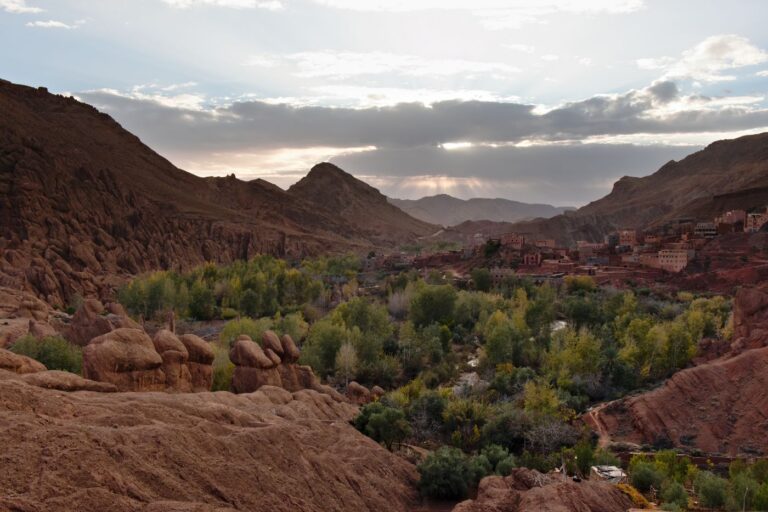
| Ait Ben Haddou and the Draa-Dades region | Earthen ksour and oasis villages | Road trips; see our other guides for the longer southern route |
| Tafraoute and the Anti-Atlas | Rugged villages and rock landscapes | Longer road journey from Agadir or Marrakech |
Distances in the Atlas are slower than they look on a map, because roads are winding and tracks between villages are often on foot or by mule. Our how many days in Morocco guide helps you decide whether a mountain stop fits your route.
What a village visit usually involves
A typical visit is a short or half-day walk between villages with a local guide, followed by tea or a meal in a family home. Some trips include a visit to a women’s cooperative that makes weaving or argan products. Others combine a village with a longer trek; see our Morocco hiking tours guide for trail planning.
Stone houses, terraced fields, irrigation channels and walnut or apple trees are common sights, but every valley is different. Do not expect a staged show. Daily life carries on, which is part of the appeal.
How to visit respectfully
- Ask before photographing people. Greet them first and accept a no without argument.
- Dress modestly. Long trousers or a long skirt and covered shoulders are appropriate in rural areas.
- Use local guides and local stays. A guide who is from the valley knows the paths, the families and the right way to arrive.
- Buy from local people. Meals, tea, crafts and a night in a guesthouse spread income more directly than a single quick stop.
- Take your waste with you. Rubbish collection can be limited in mountain villages.
- Be careful with gifts. Handing out sweets or money to children can encourage begging; if you want to give something, ask your guide how to do it.
- Respect prayer times and Ramadan. Eating, drinking and noise in public can be sensitive during fasting hours.
Mules, donkeys and animal welfare
Mules carry luggage on many mountain routes. Treat the animals as workers that depend on their owners: avoid loads that look excessive, do not ride an animal that looks tired or injured, and ask the operator how they look after their animals. If you are unsure, carry your own daypack and use the mule only for the main luggage.
When to go and what to bring
Spring and autumn are often the easiest seasons for walking. Summer can be hot in the valleys and cooler at altitude; winter brings cold nights, ice and sometimes snow on higher tracks, and some routes close. Check the official Moroccan weather service before you go and confirm road conditions with your driver or guide.
- Sturdy shoes with grip, a warm layer and a rain jacket.
- Water, sun protection and some cash in small notes.
- A headlamp or phone torch if you will arrive after dark.
- Offline maps, since mobile signal can drop in the valleys.
Common mistakes
- Treating a village as a quick photo stop instead of arranging a meal or a stay.
- Joining a very cheap tour without asking how guides, drivers and muleteers are paid.
- Trying to visit too many valleys in one day.
- Walking in winter or after heavy rain without checking conditions.
Berber village Morocco: questions answered
Can you stay overnight in a Berber village?
Yes. Many villages have simple family-run guesthouses, or gîtes. Book through a guide, a local association or a reputable operator, and ask what facilities to expect.
Are Berber and Amazigh the same thing?
They refer to the same people. Amazigh is the term many people use for themselves, and Berber is the older outside name still used in travel writing.
Do I need a guide?
For walking between villages, yes, or at least a local person who knows the paths. On the main road to a village you can visit without one, but you will understand less and may feel awkward.
Is it appropriate to give gifts or money to children?
It is best not to hand out sweets or cash. Ask your guide how to support the community instead, for example by buying meals or crafts locally.
Choosing a respectful visit
If you only have a day, choose a valley close to Marrakech with a local guide and lunch in a village home. If you have more time, combine a trek with a night in a village gîte. Either way, travel slowly, spend locally and treat the village as someone’s home, not an attraction. For more ideas, see our things to do in Morocco guide.
Related guides
- Hot Air Balloon Morocco: Sunrise Flights Near Marrakech
- Erfoud Fossils Morocco Official Tourism: Info and Tips
- Museums in Casablanca Morocco: 7 Best Places to Visit
- Top Places to Go in Morocco: 10 Best Destinations
- Morocco Quad Biking: 9 Best Tours and Safety Tips
- Horse Riding in Morocco: 9 Best Places and Safety Tips